205 Water Street
$7,495,0003 beds · Penthouse, 2010
Details
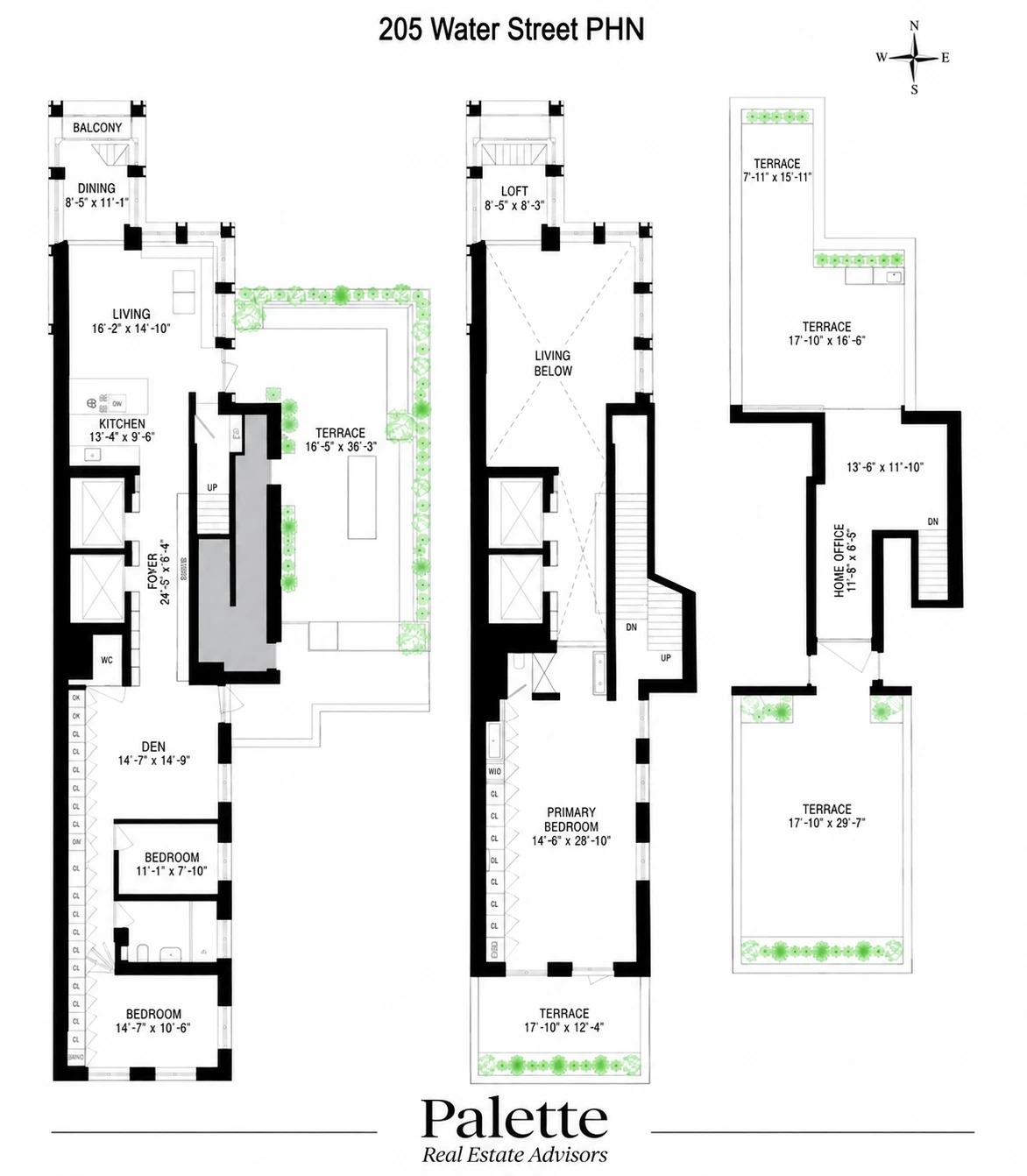
Floor plan
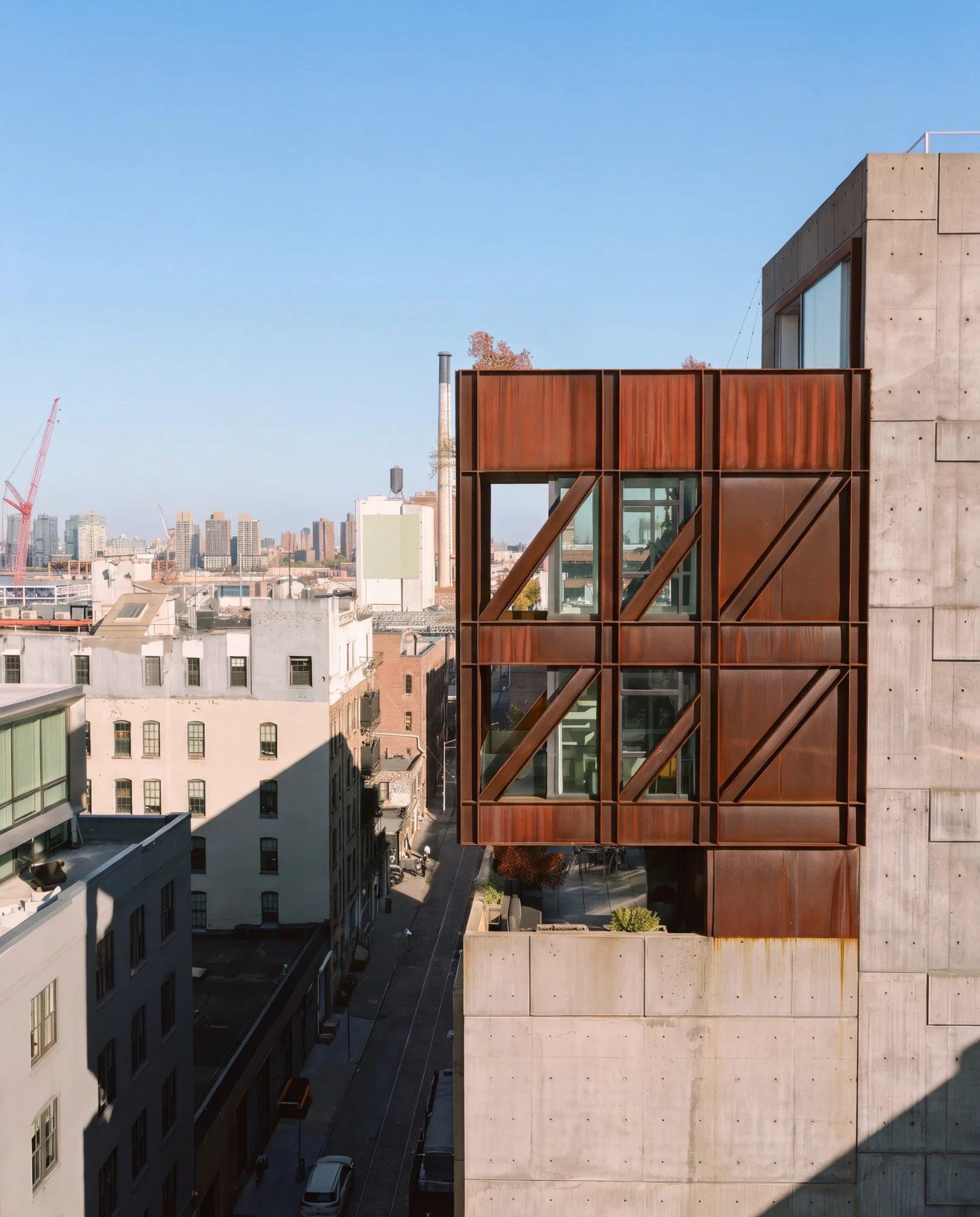
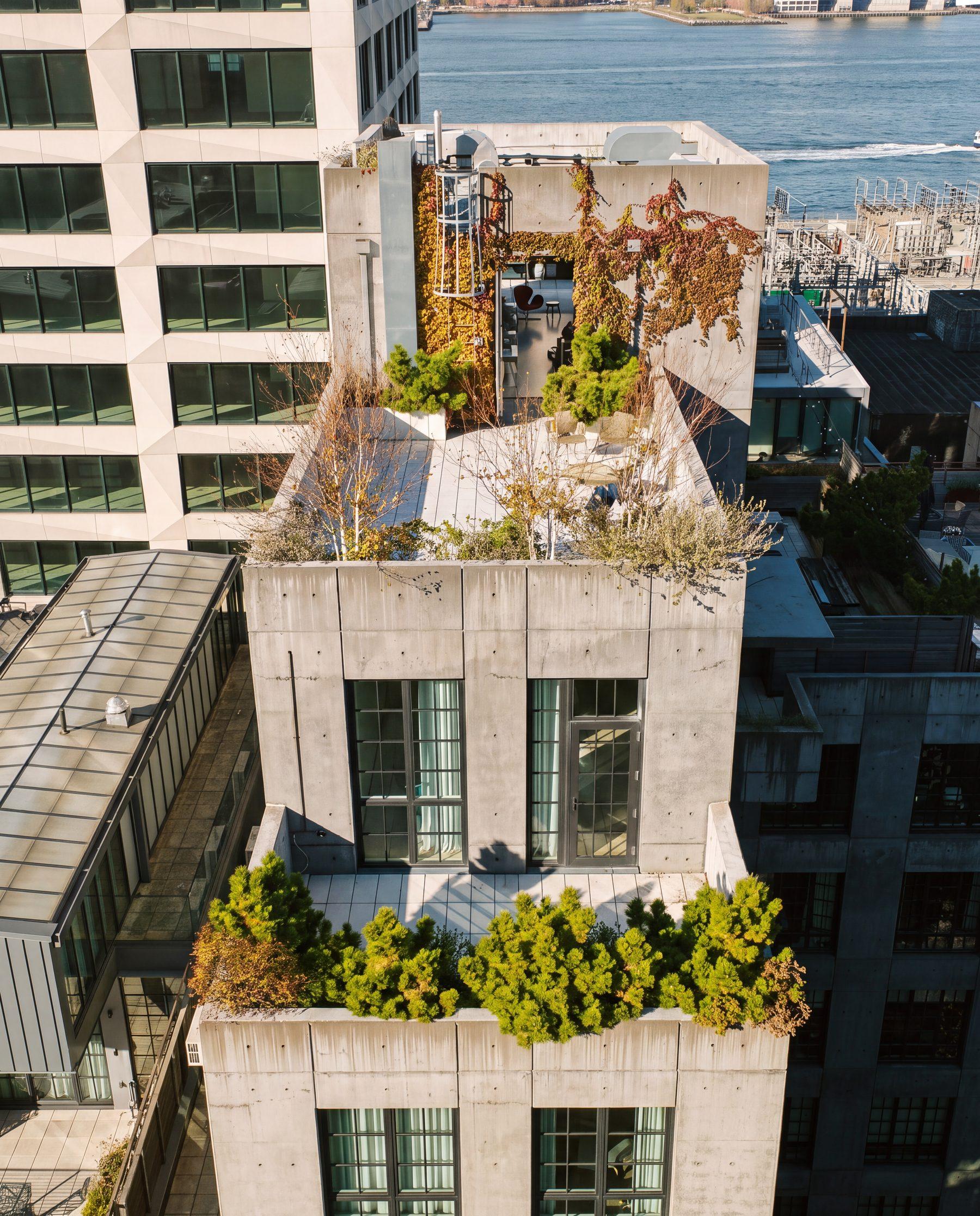
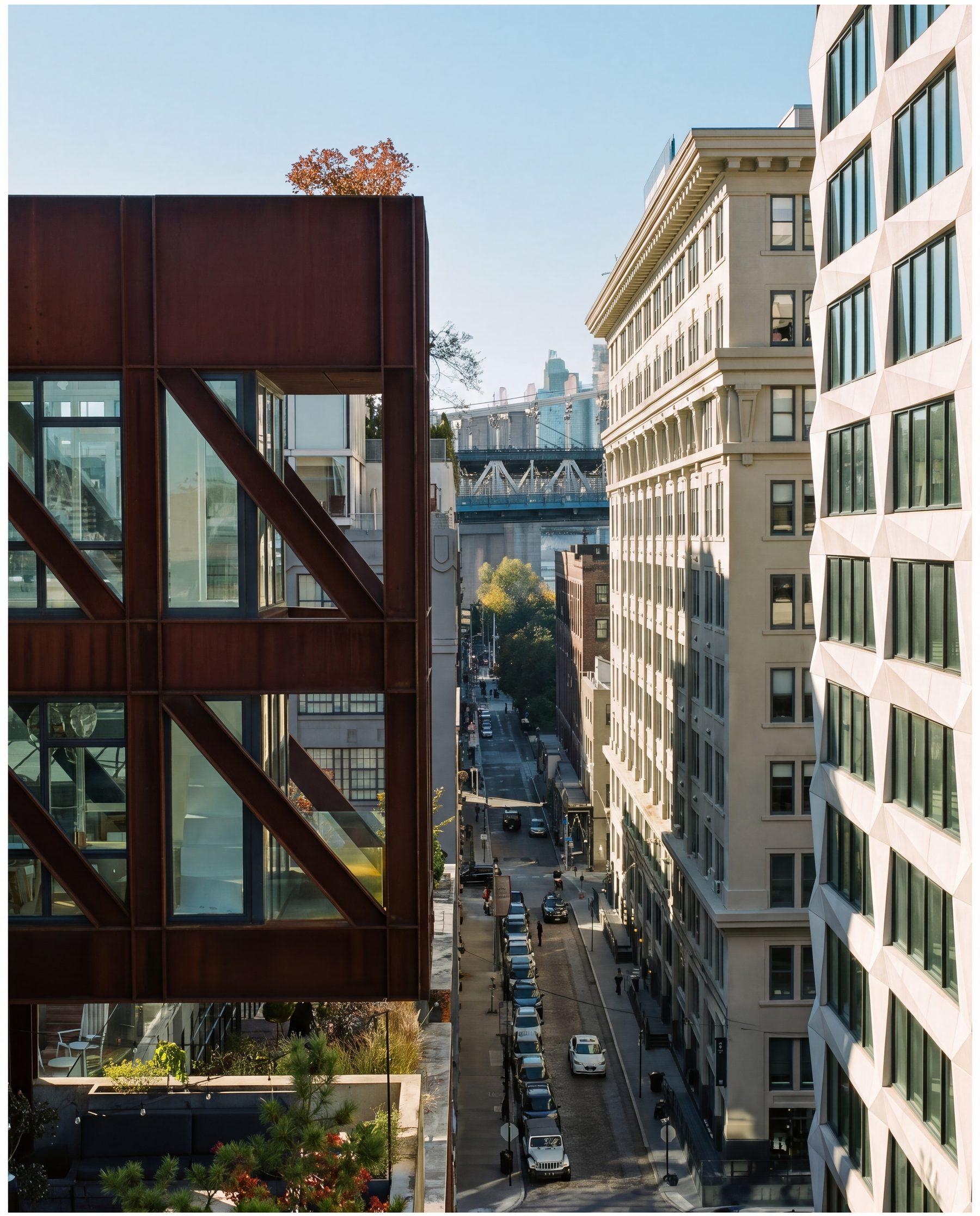
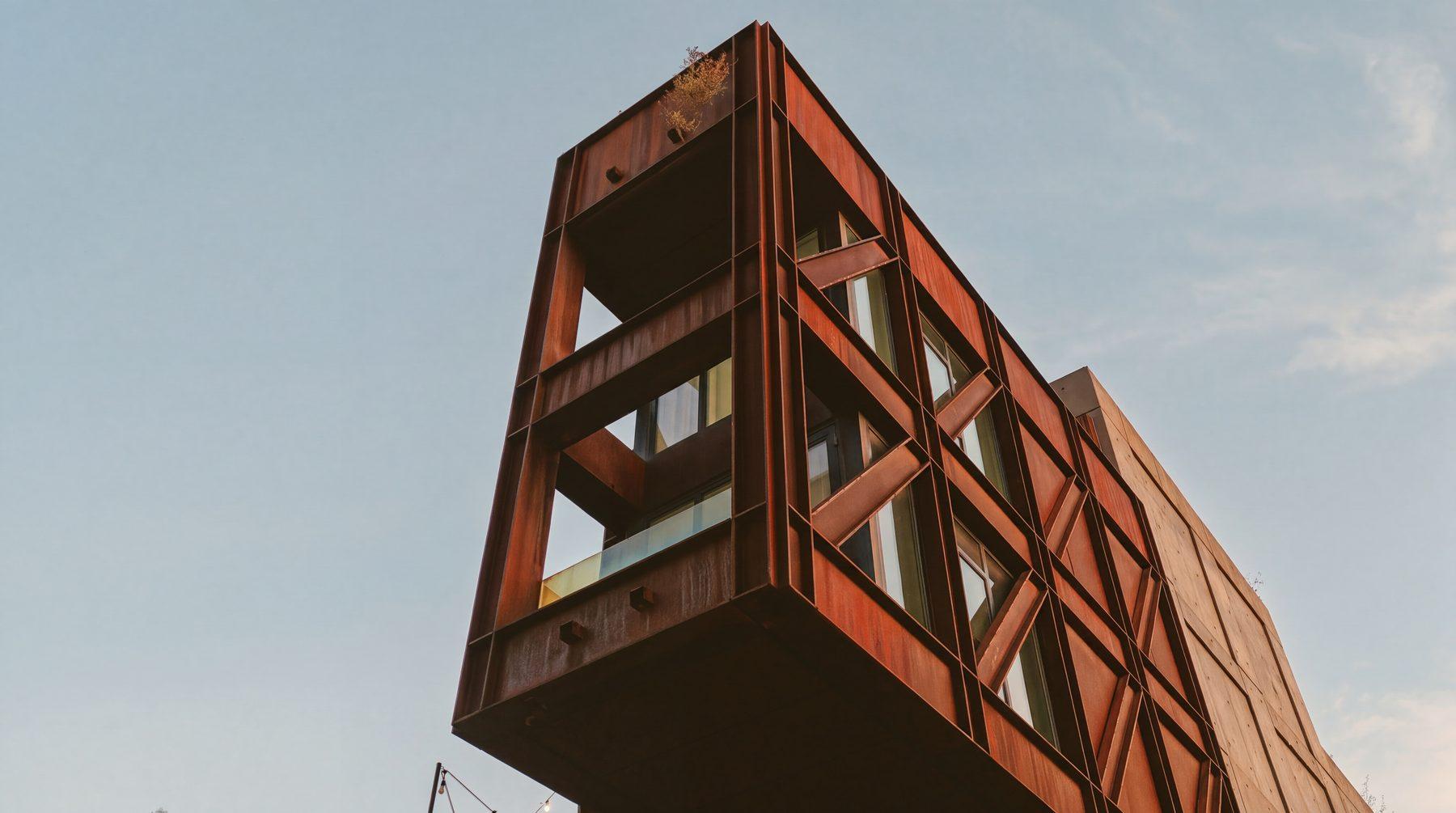
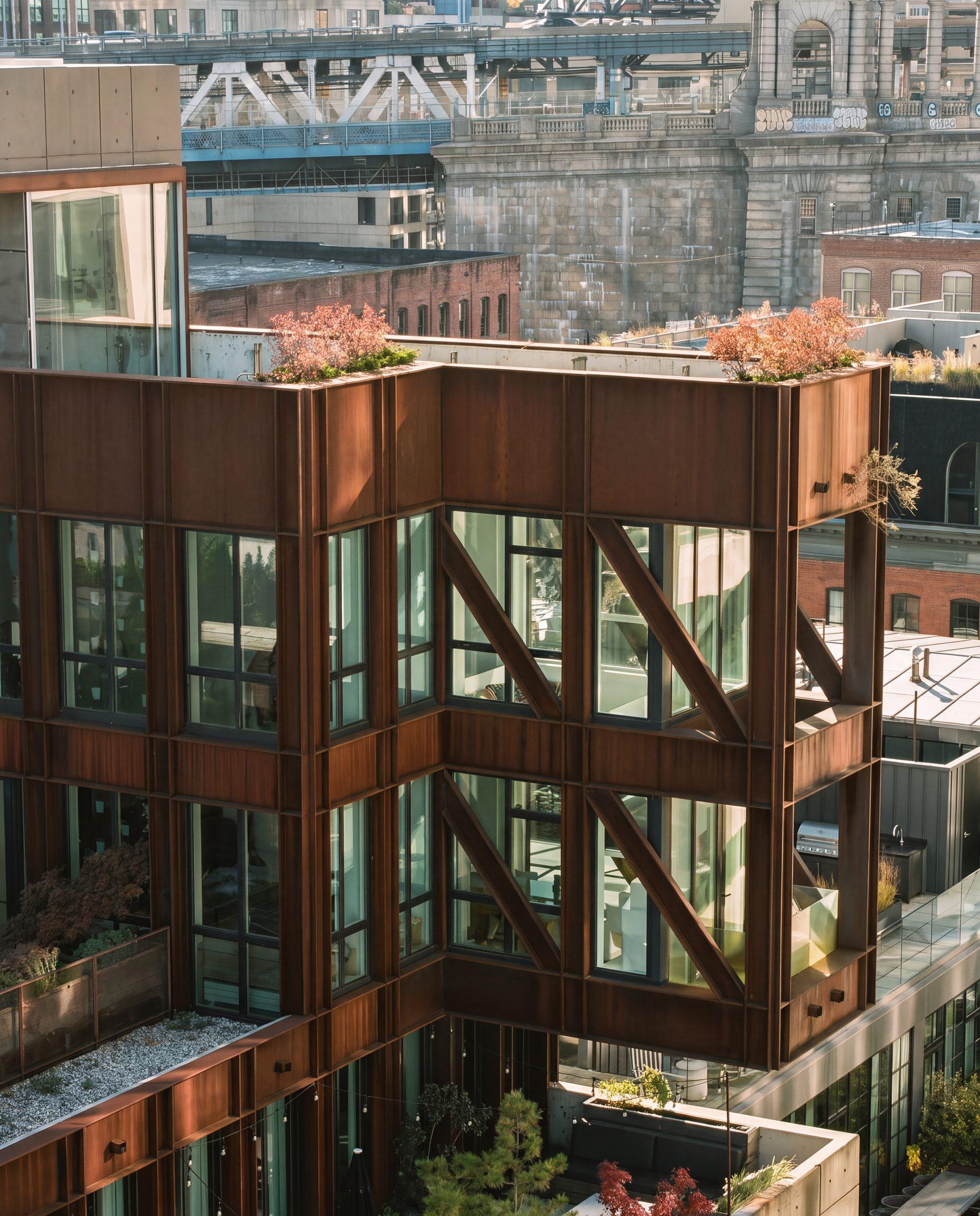
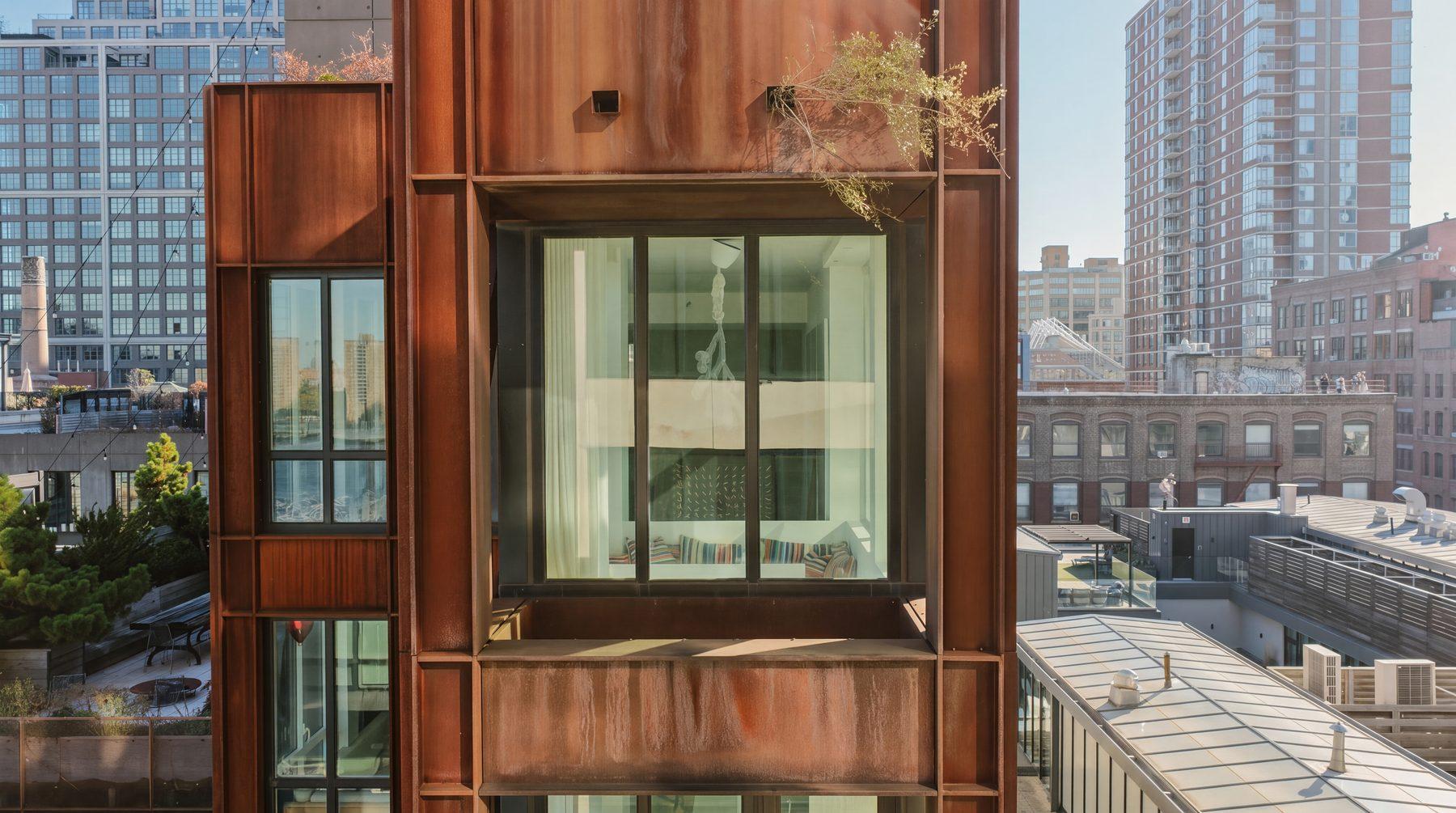
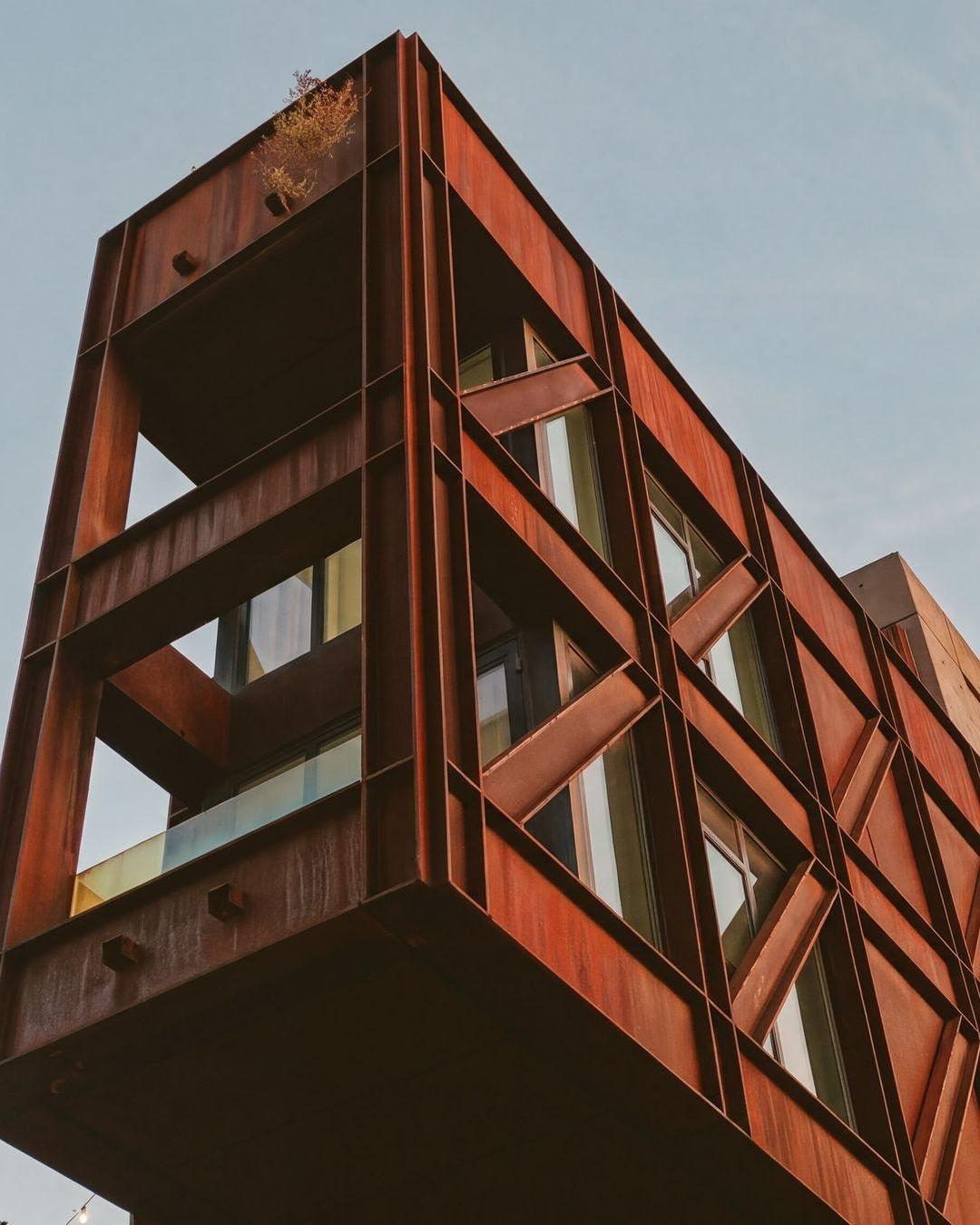
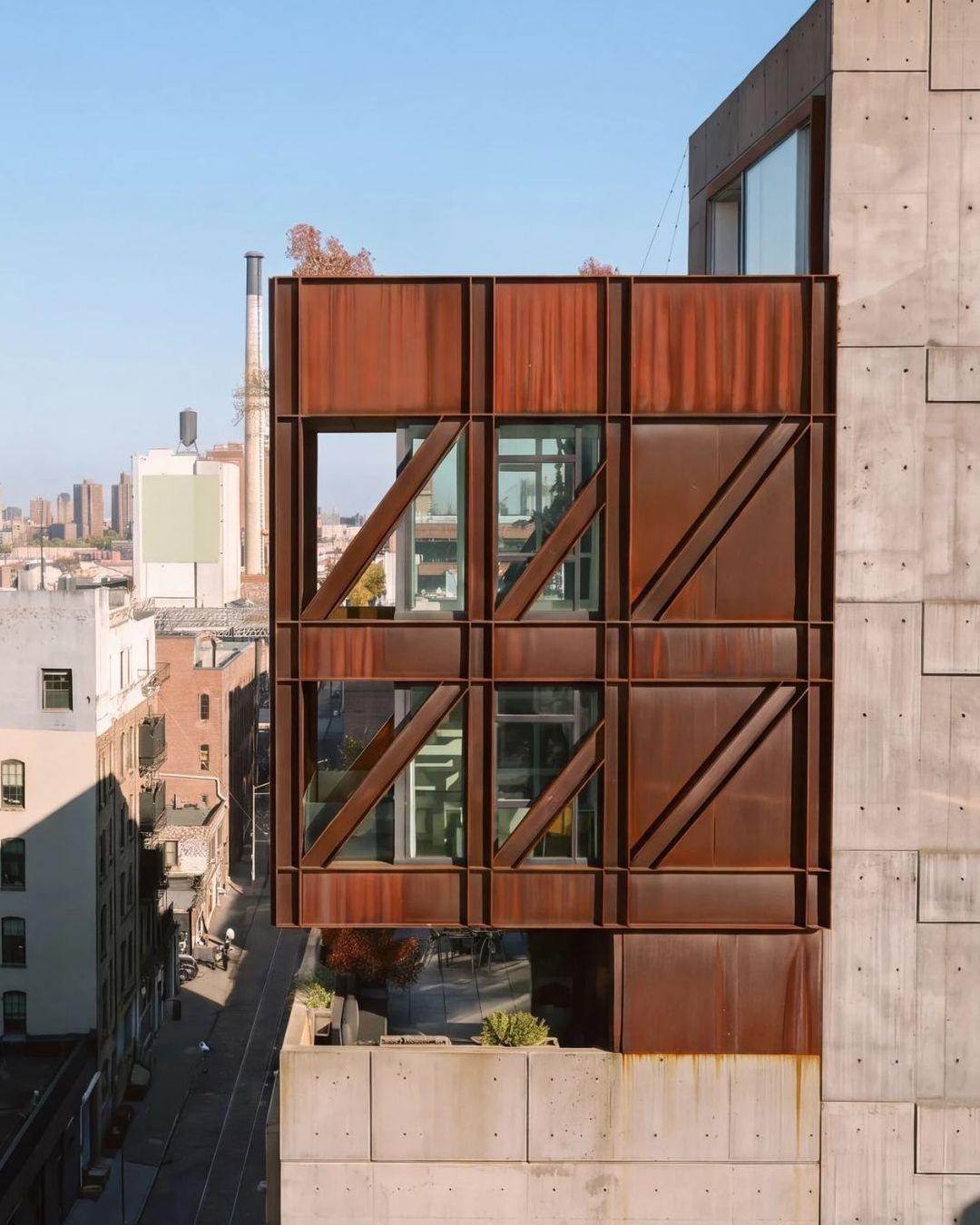
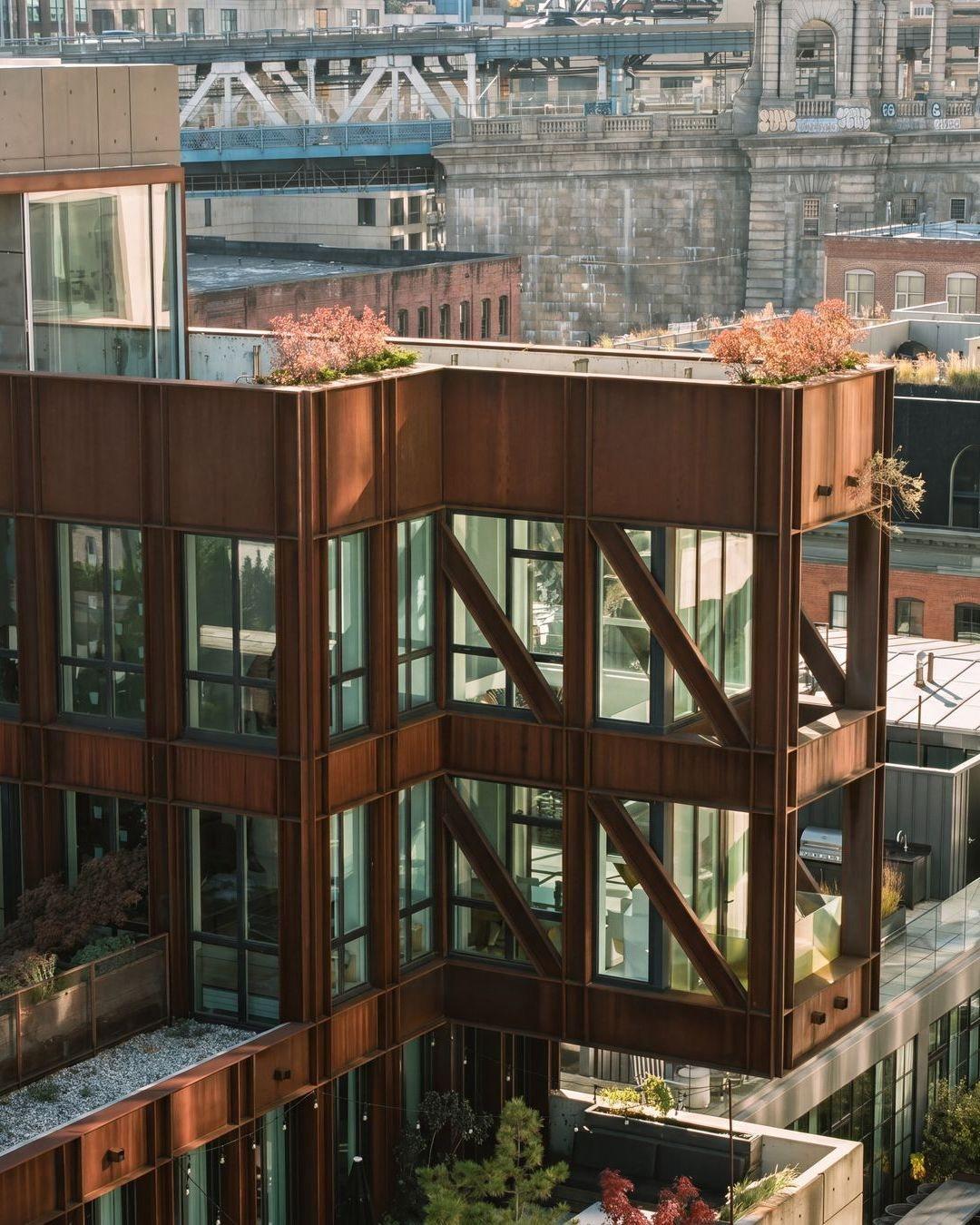
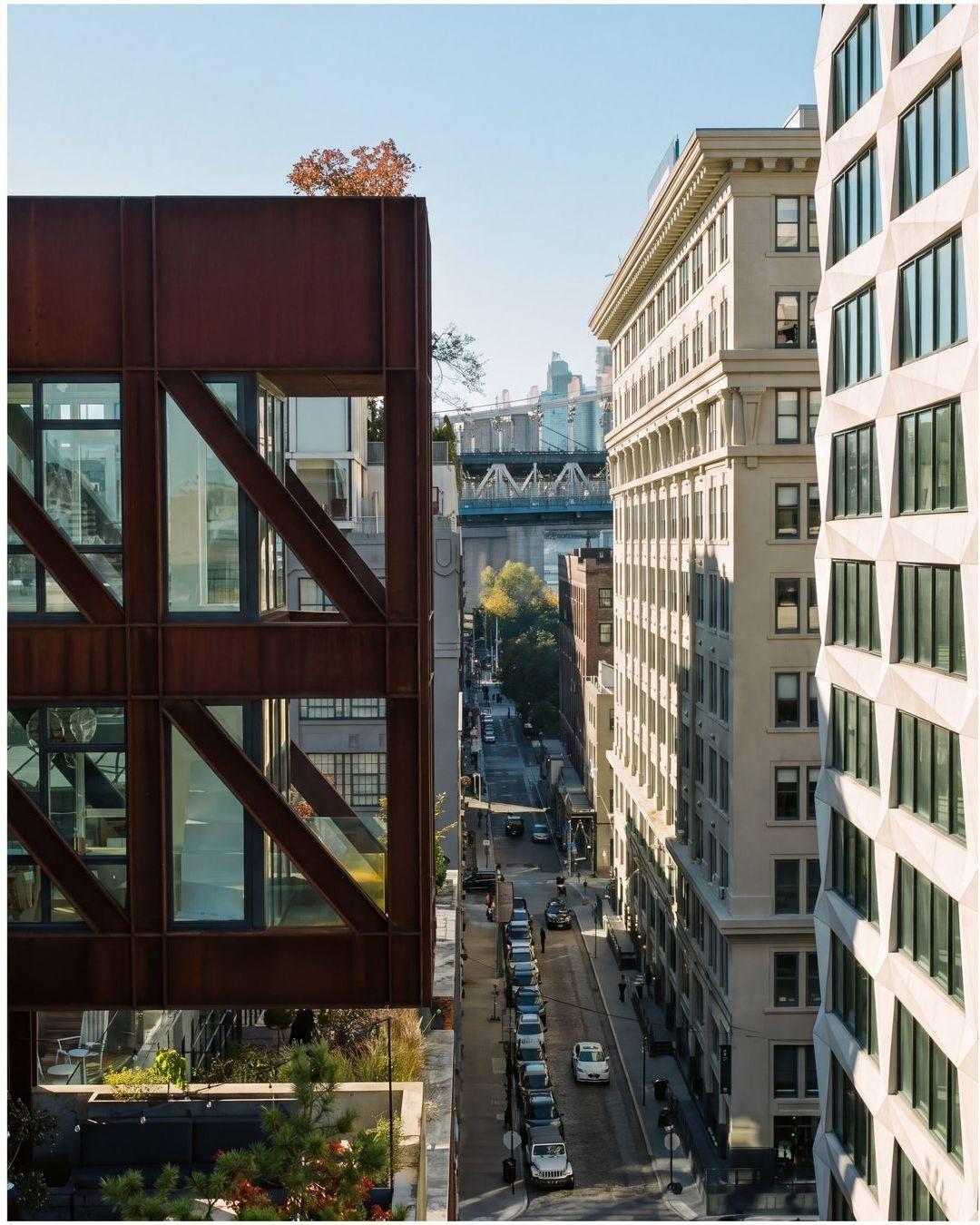
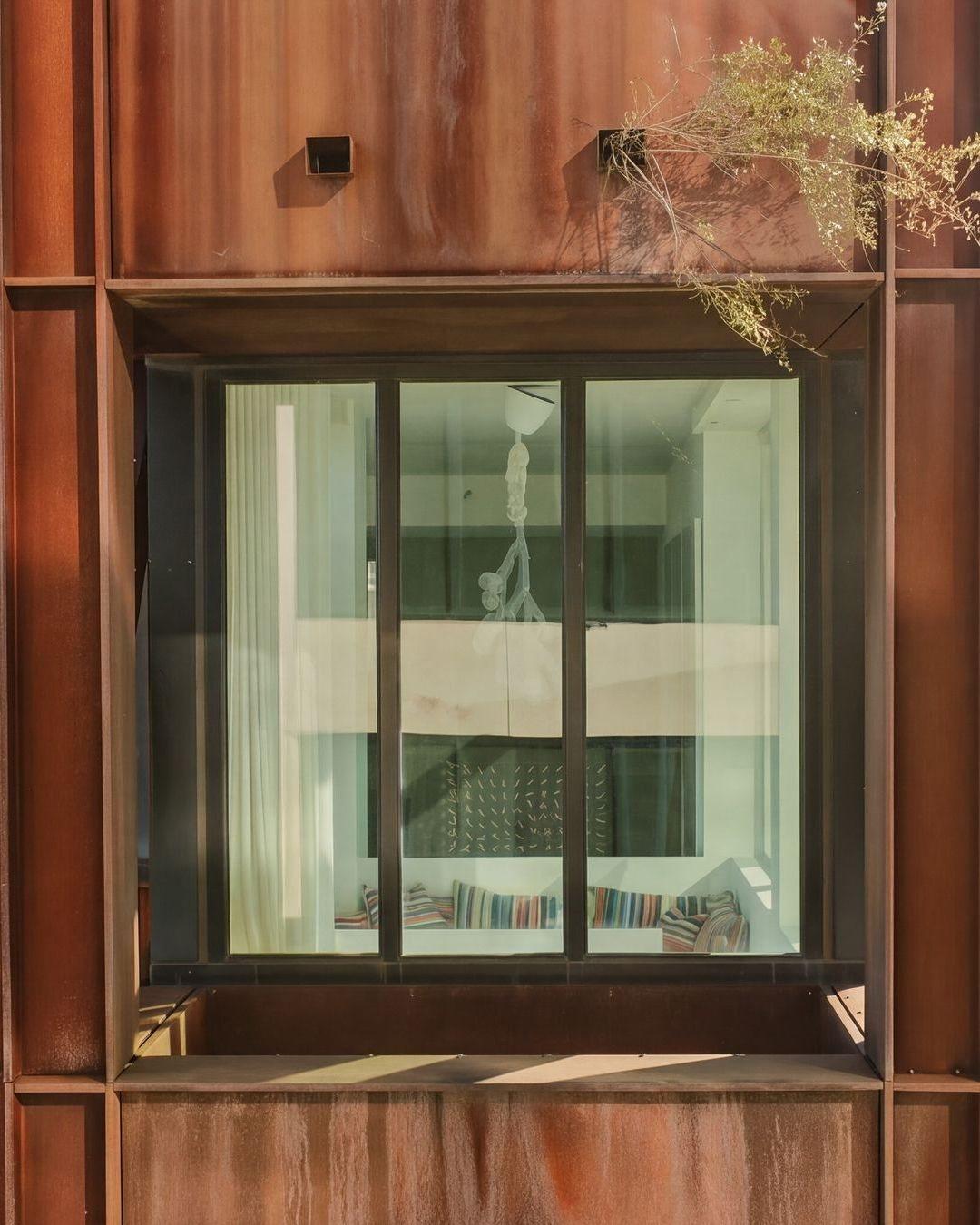
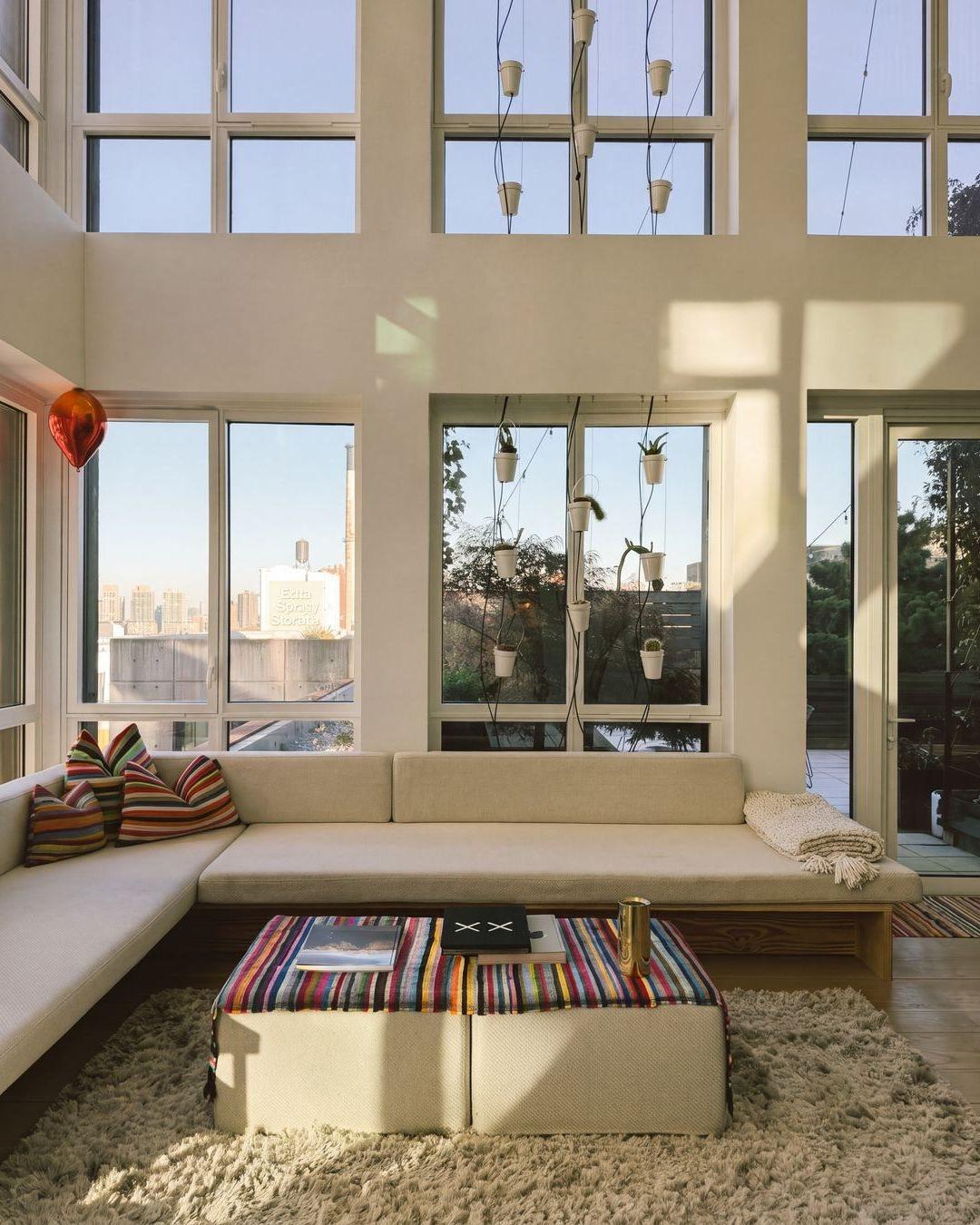
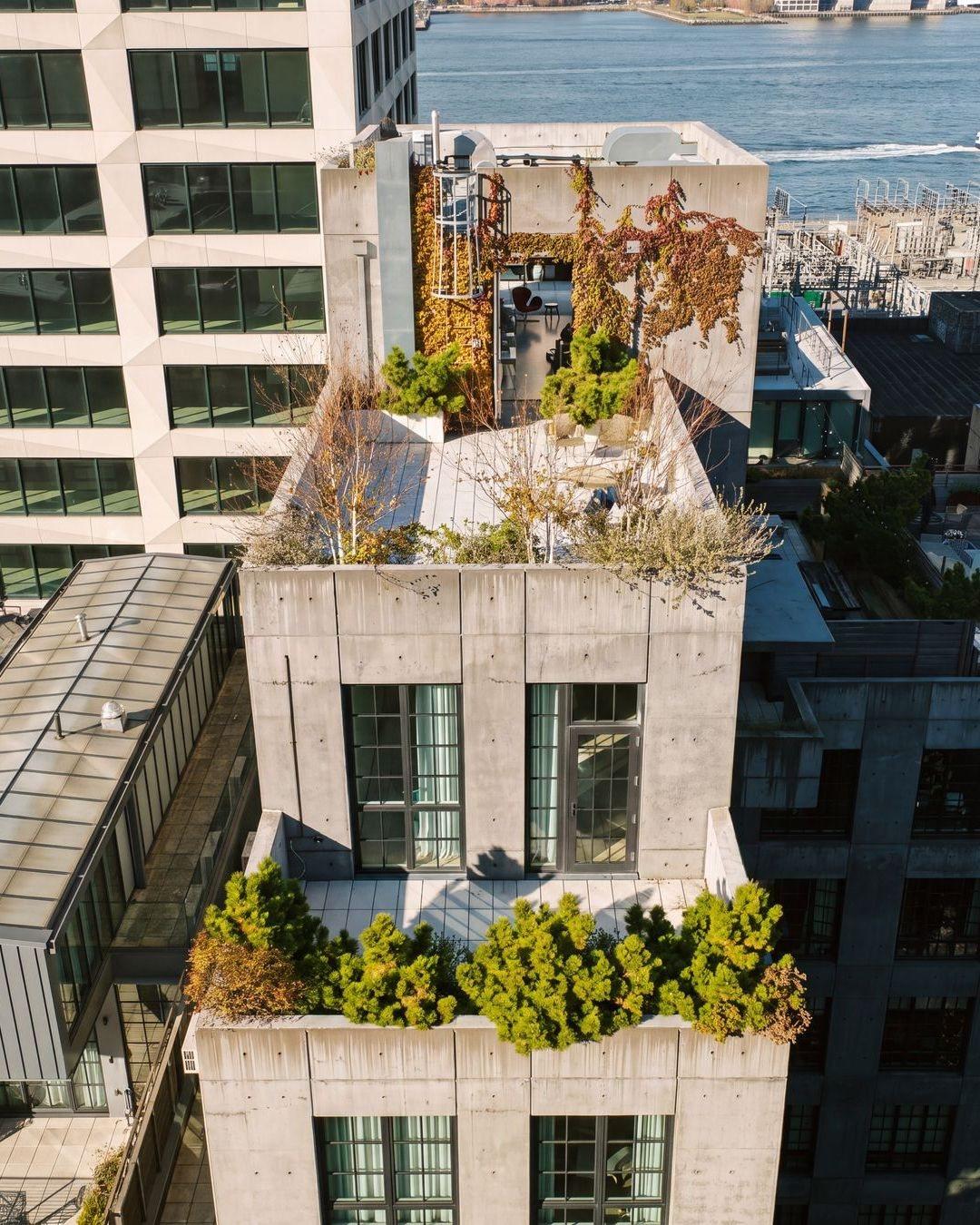
Bjarke Ingels calls the single-family home "the smallest molecule of architecture," and says there is "no project more important than creating the framework for the life of your family." His own home is a three-story penthouse on the roof of 205 Water Street, a Toll Brothers condominium of 2010 in the Dumbo Historic District, with terraces and roof gardens around it. A private elevator opens into the living room, daylight comes from four sides, and the garage is entered through a wall of corten steel. He describes it as a freestanding, three-story townhouse sitting on top of an eight-story building.
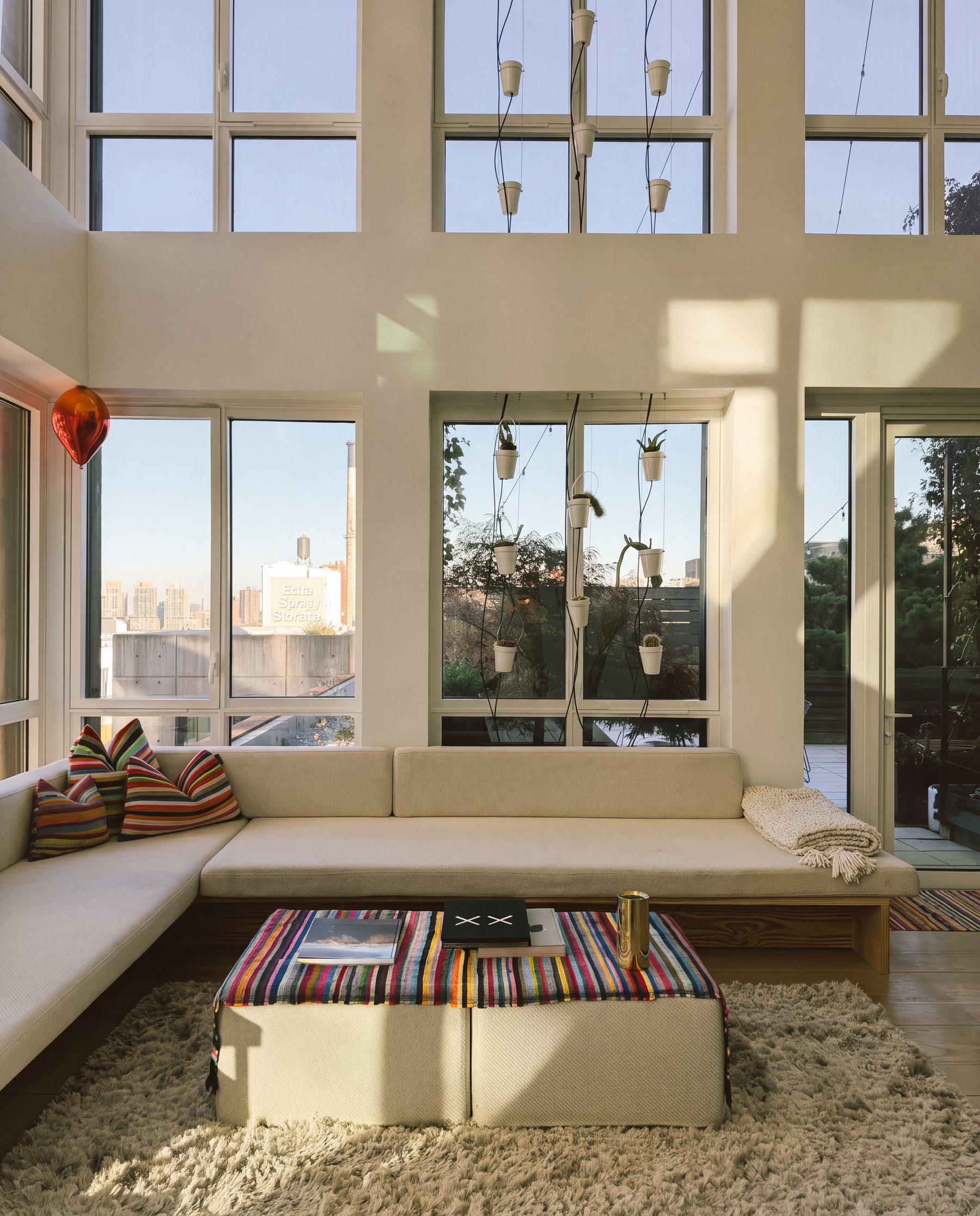
Ingels bought the apartment in August 2015 as a two-story duplex, with a private elevator and twenty-foot ceilings in the living room. He had been looking in Lower Manhattan, where BIG had just been named architect of Two World Trade Center, and the one thing he wanted was a private outdoor space and a living room. Roof garden on that scale, he says, is hard to find downtown. Brooklyn Bridge Park had opened its first phases, and Dumbo, as he puts it, is where the city goes all the way into the water. By his count the apartment has as much outdoor space as indoor, which he calls "a massive anomaly in New York."
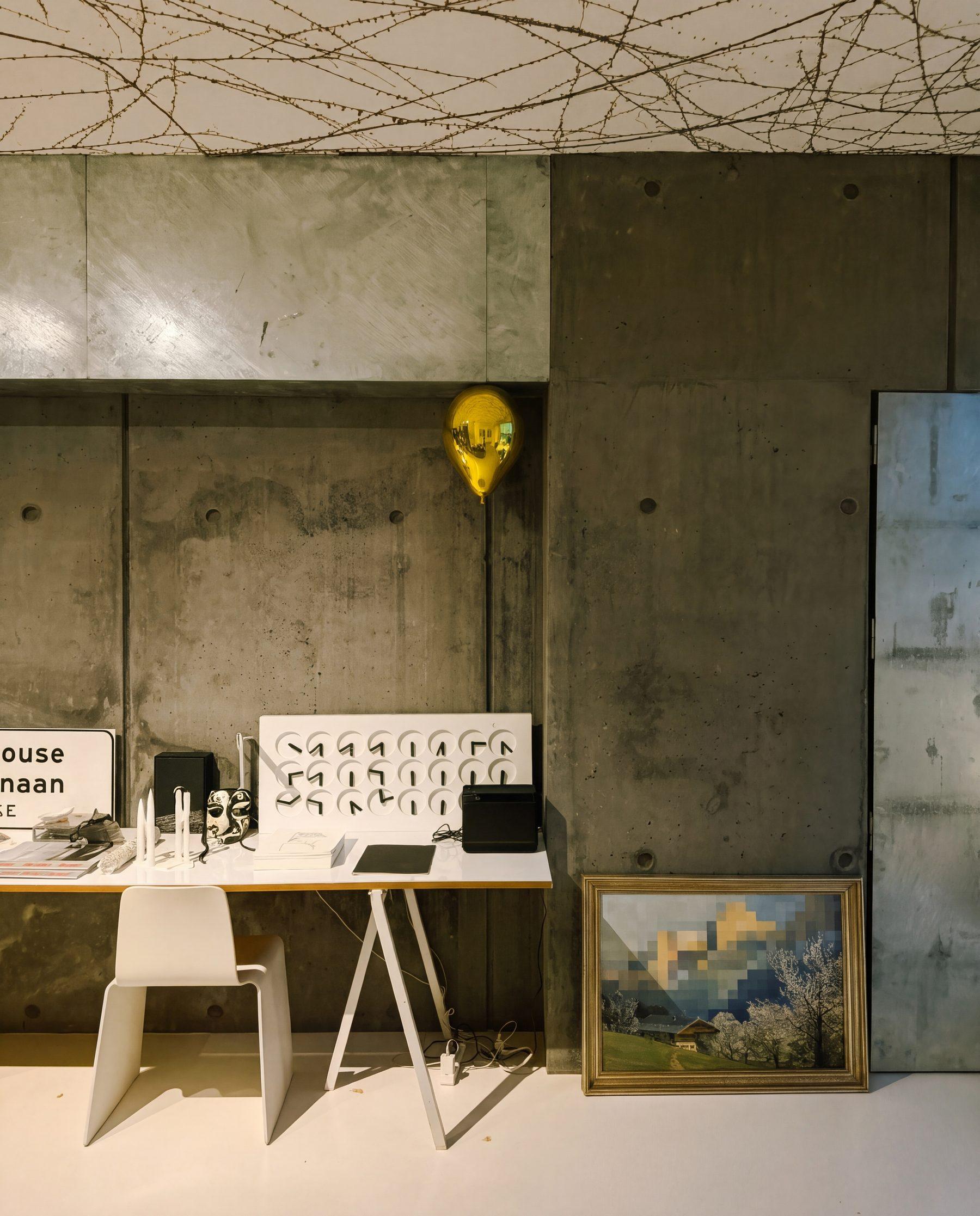
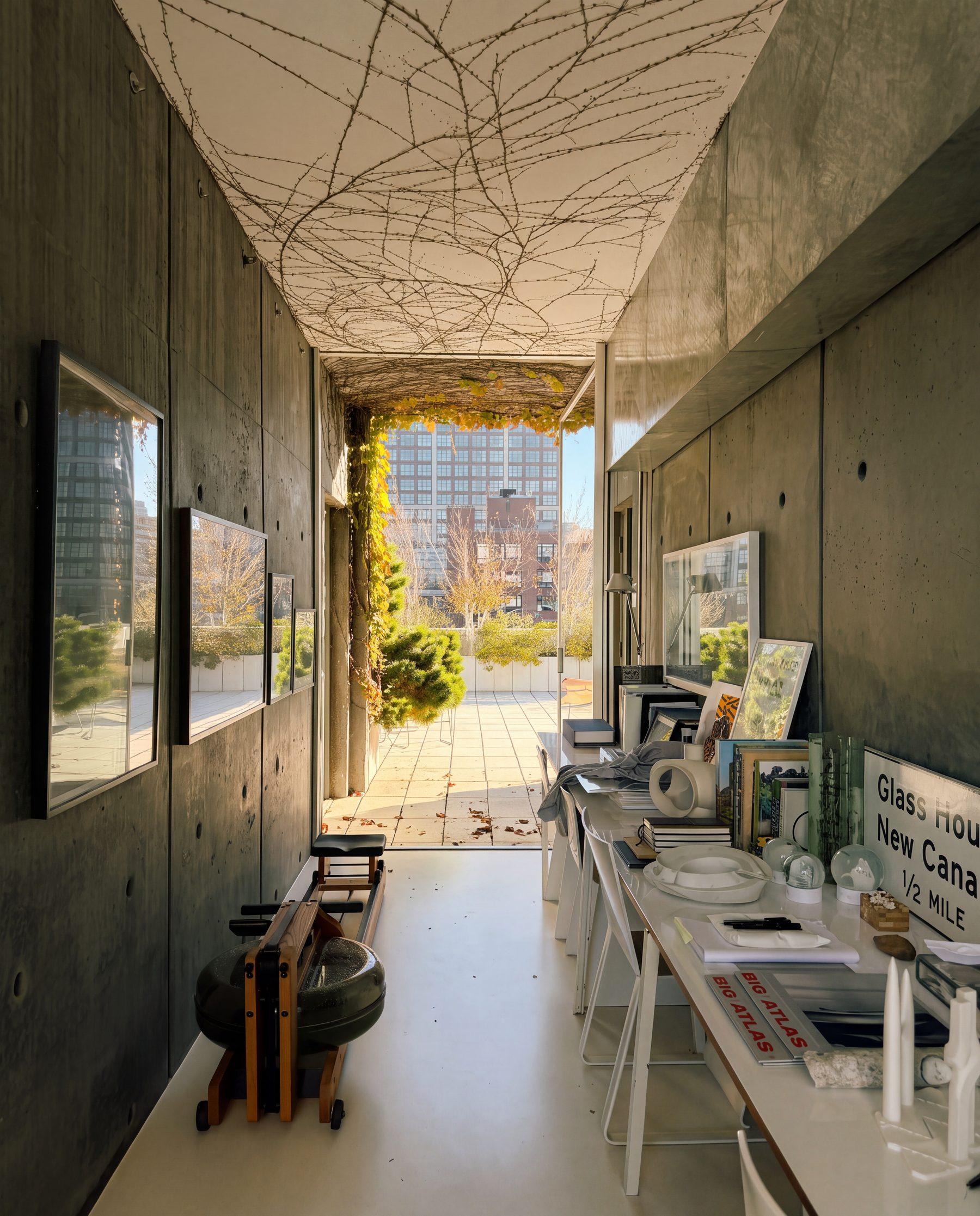
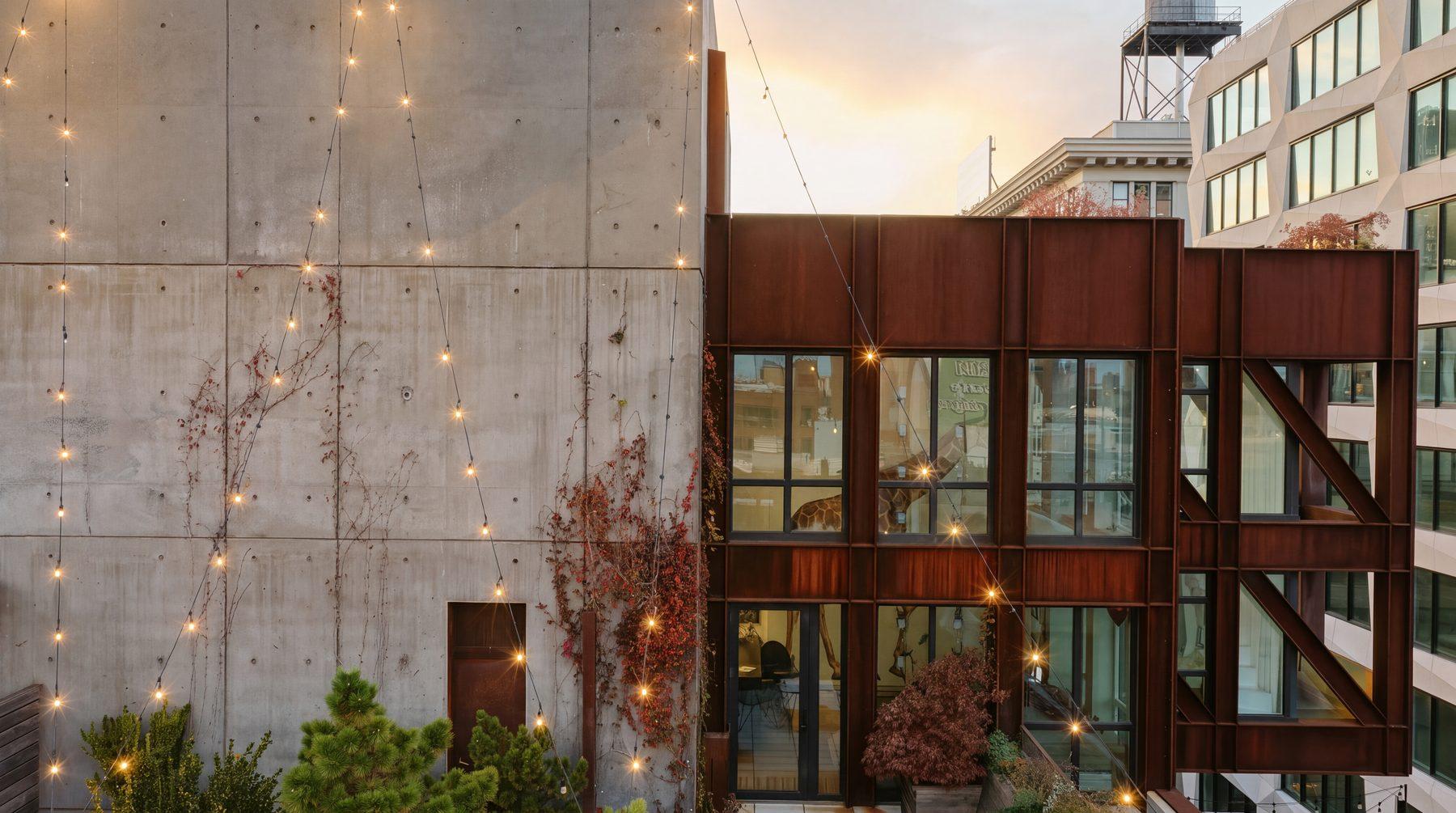
The largest change is the third floor, which did not exist. The roof held the building's two fire stairs, which ended in open landings under a roof, with no enclosed room between them. Ingels bought one of the stairs from the condominium, closed in the space between the landings and made a room on top of the building, with a garden on either side of it. The walls are the building's old outer wall, kept as concrete. The floor is glossy white epoxy and the doors are galvanized. The living floors have windows through at least 270 degrees, and the top floor adds the last ninety, toward Brooklyn Heights. By his account the building had zoning envelope left when it ran out of density, which is why the apartment stands on the roof with daylight on four sides.
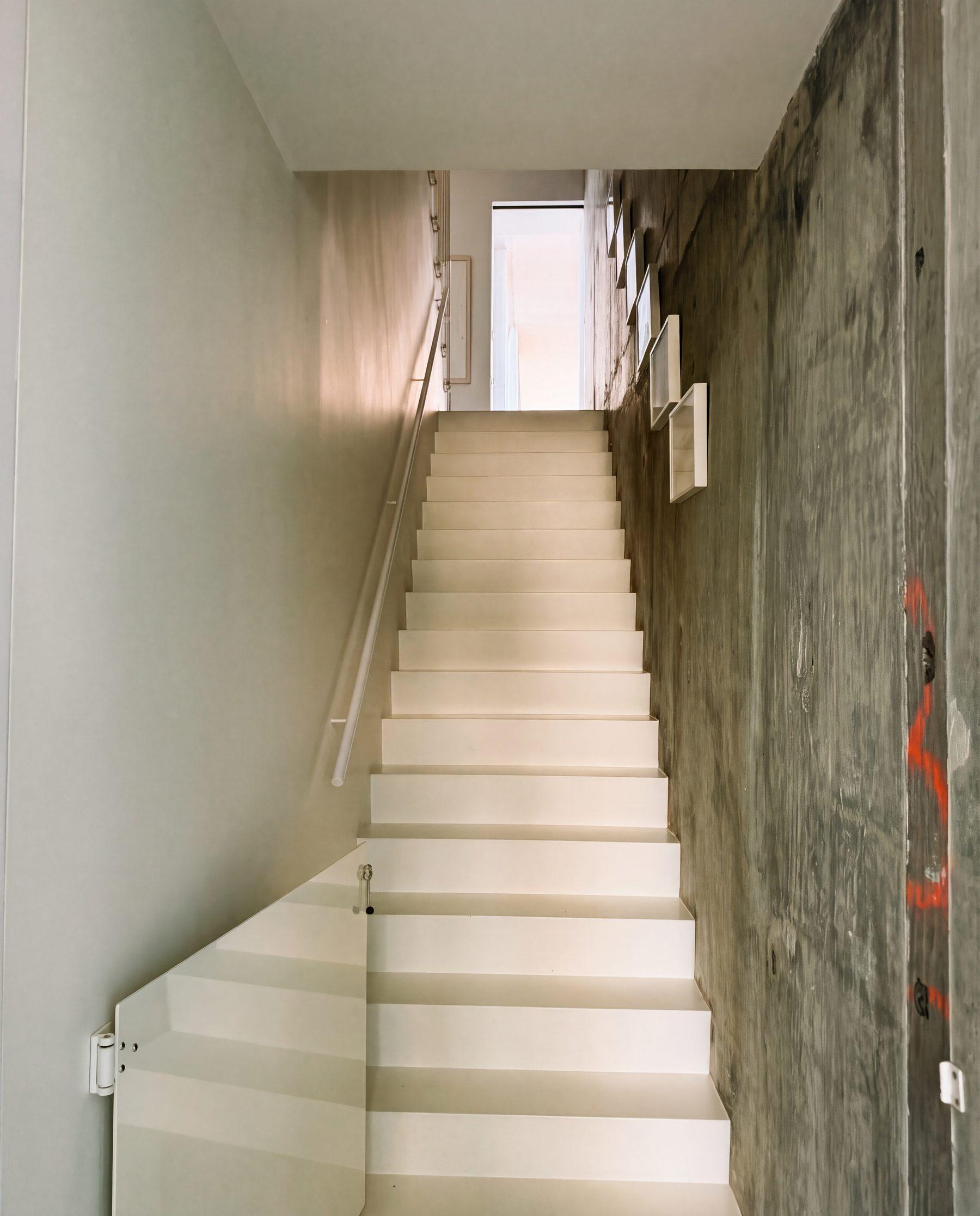
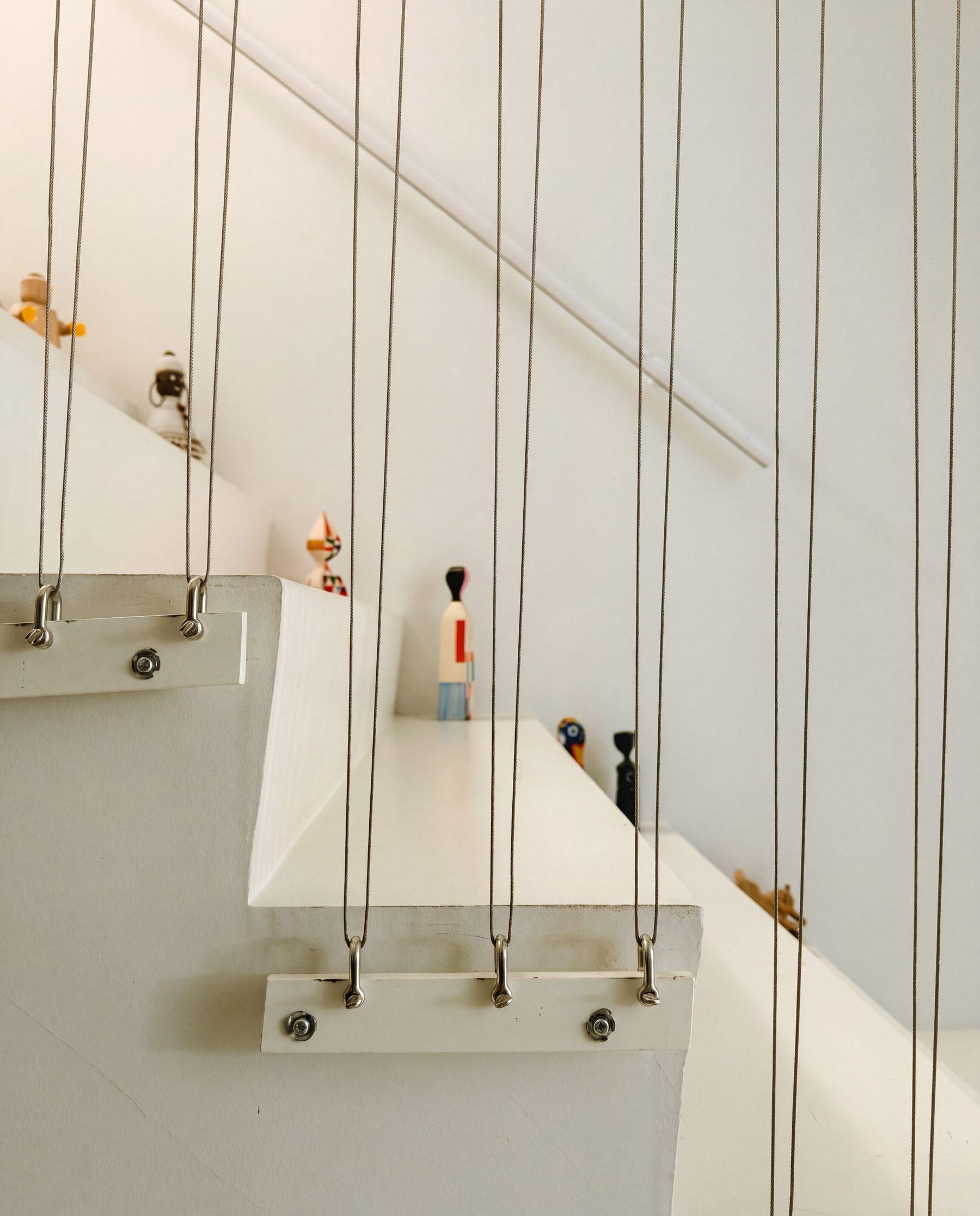
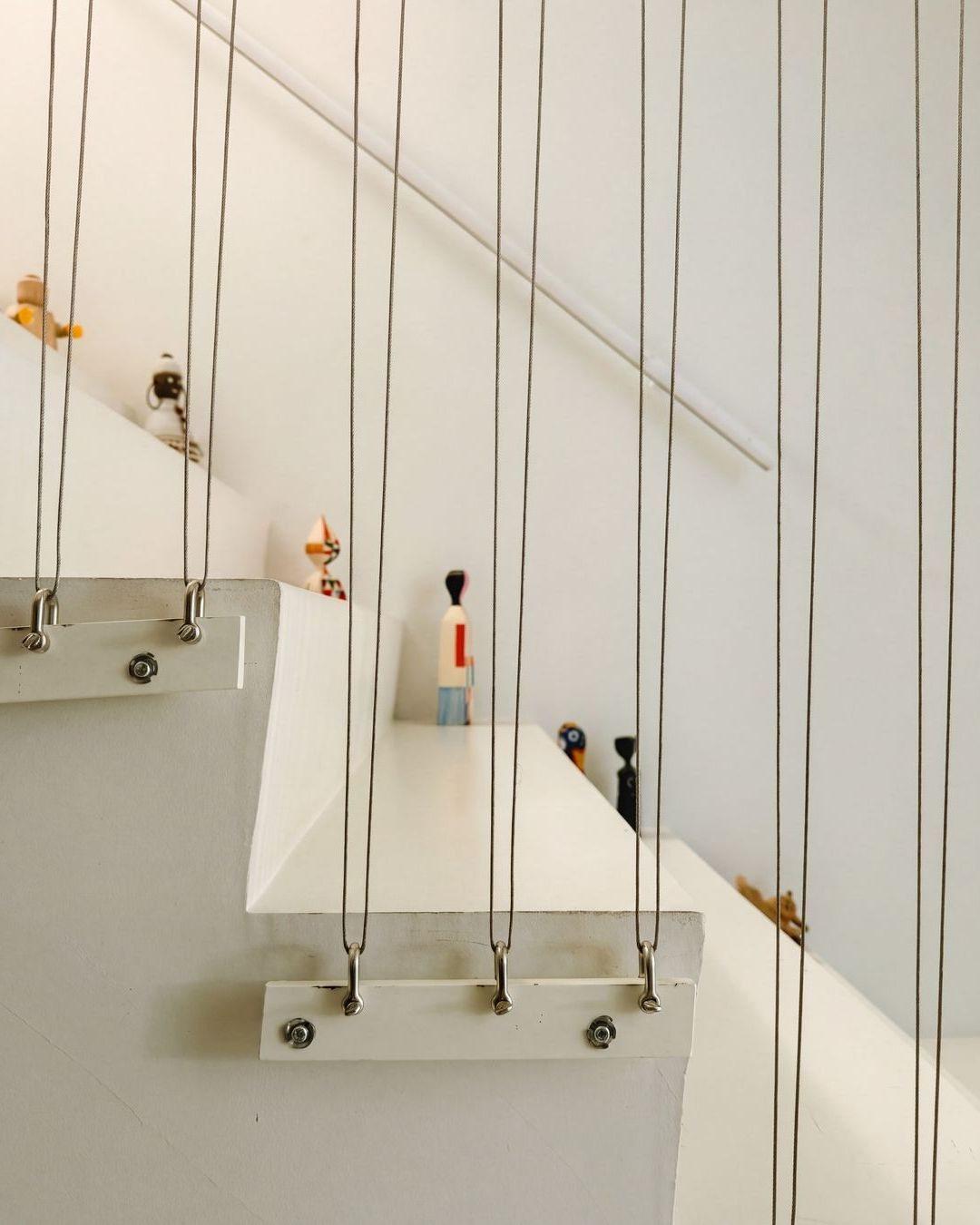
Buying the fire stair also changed how the apartment is entered and climbed. The elevator had opened into a stairwell and now opens into the living room. The white stair that runs through the apartment is the top flight of that fire stair, and Ingels removed as much wall as he could so that the two stairs read as one. A townhouse has one stair, in the middle, and the three floors here are now tied together the same way. A townhouse also sits between its neighbors and has a front and a back, and this one has windows most of the way around.
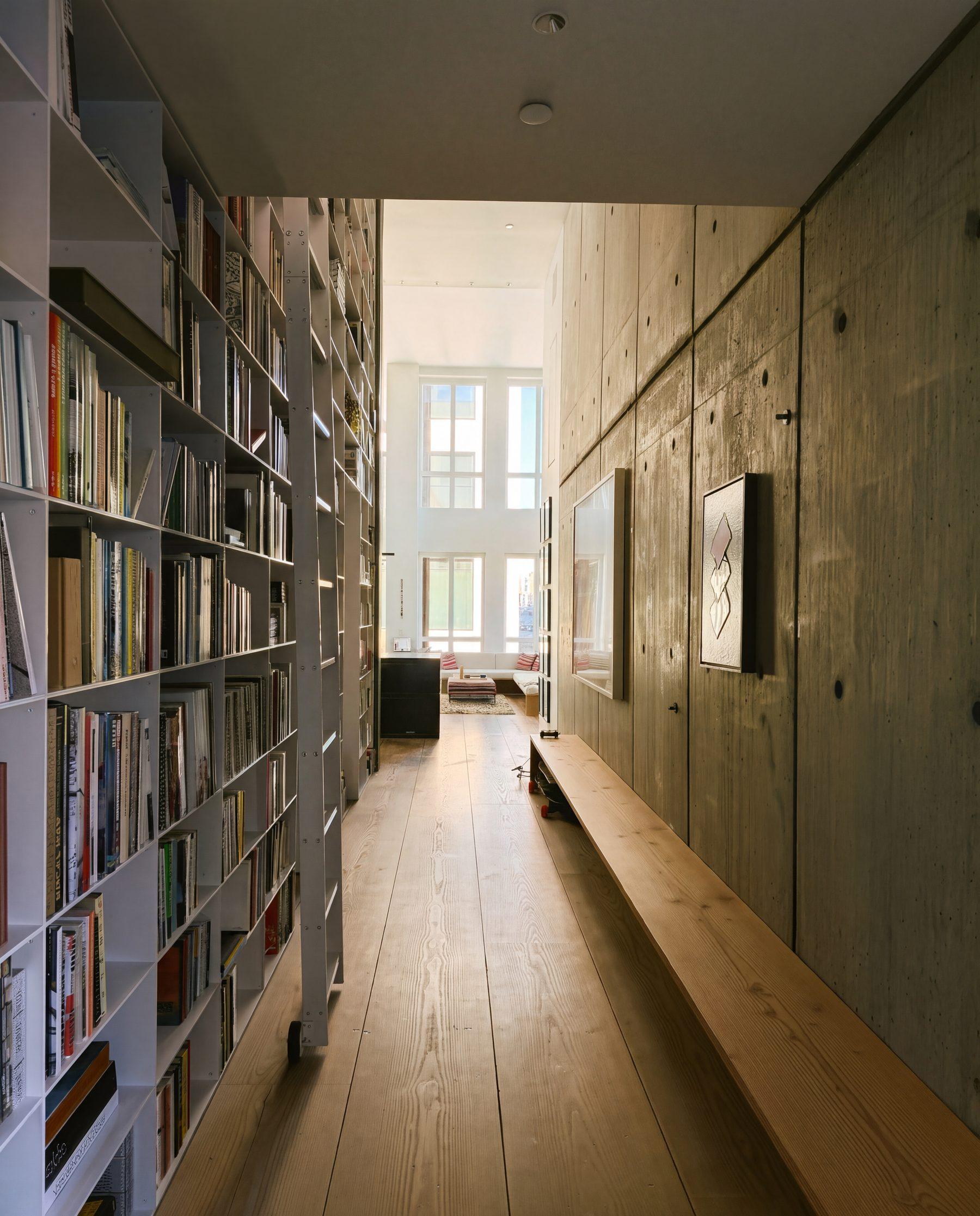
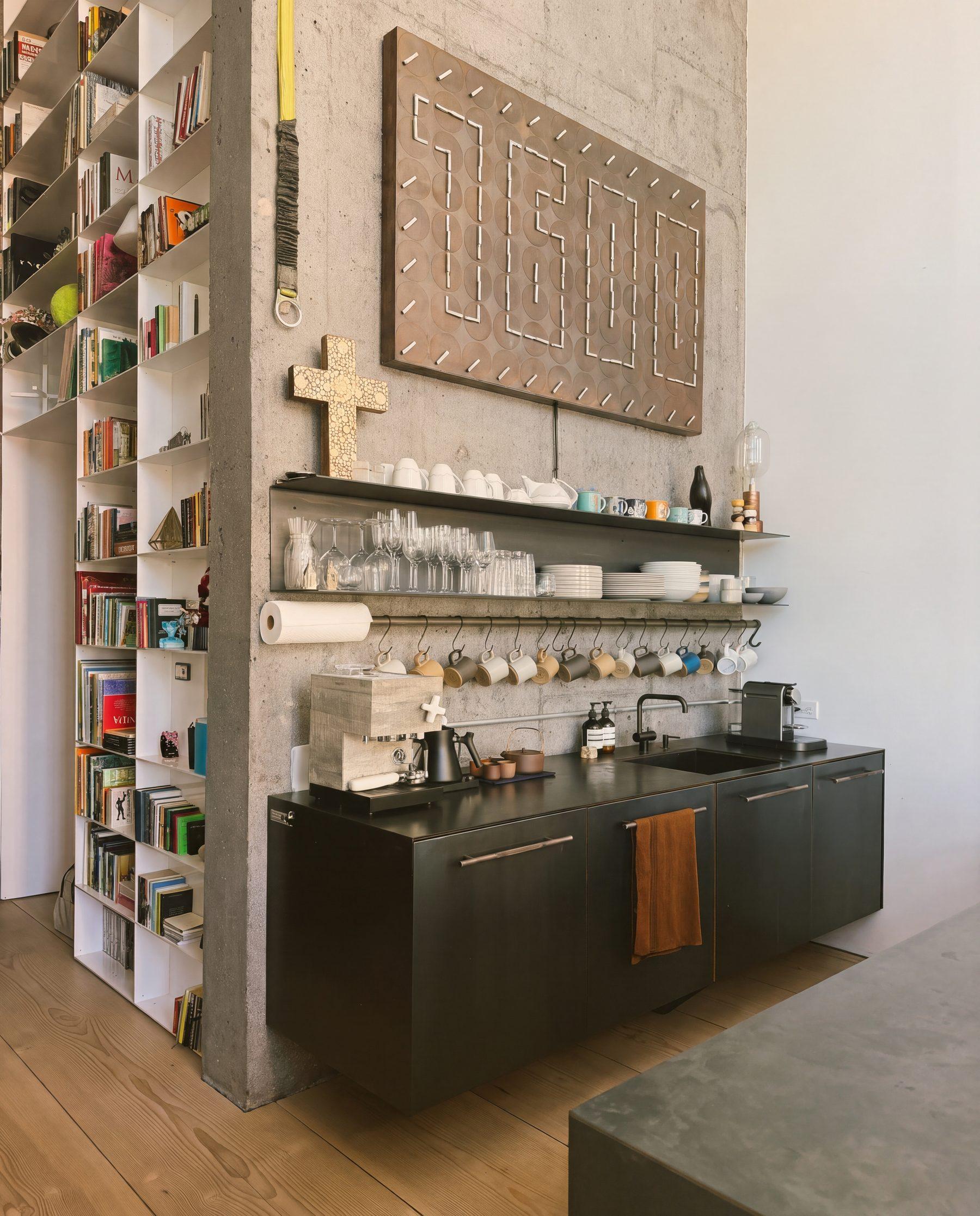
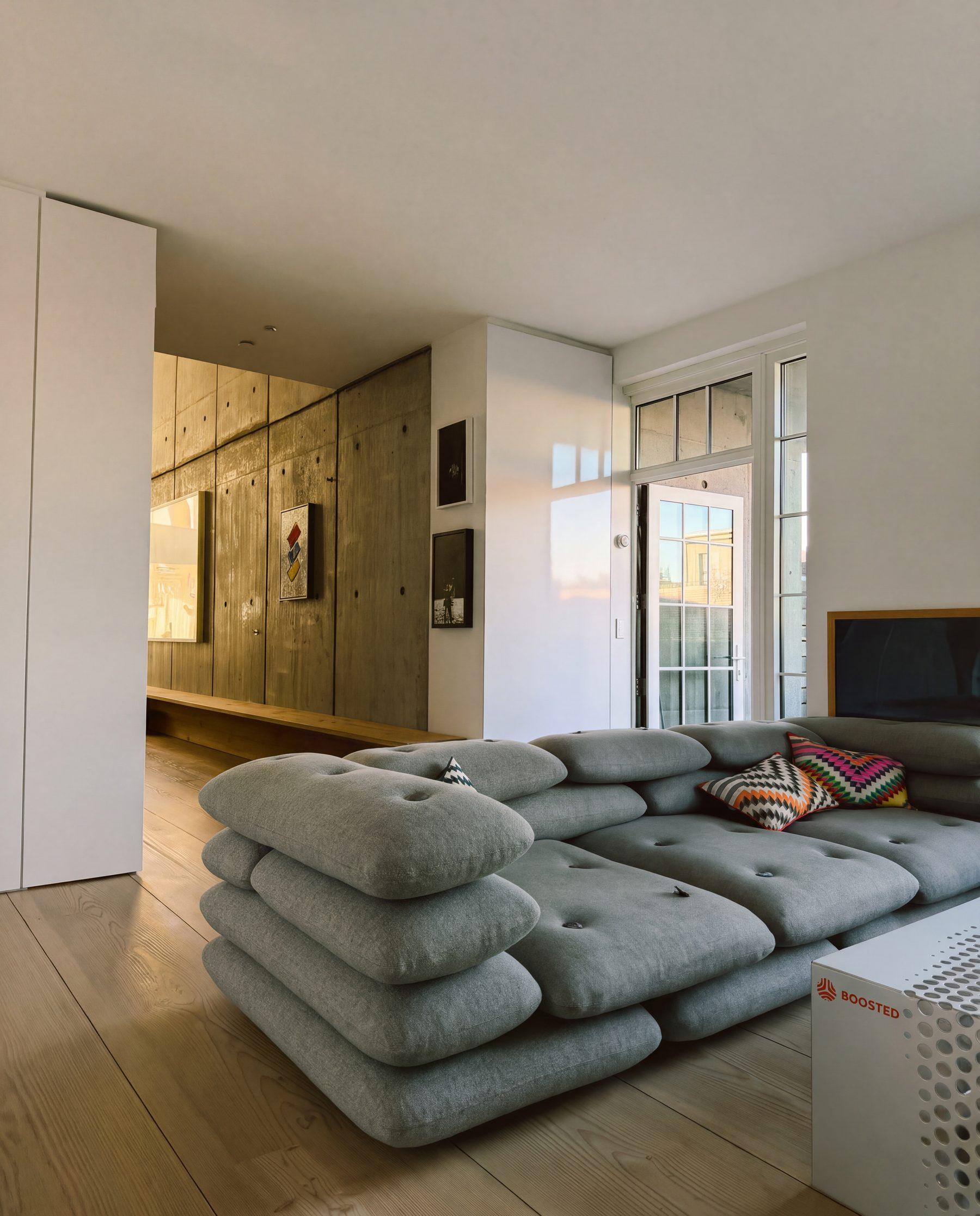
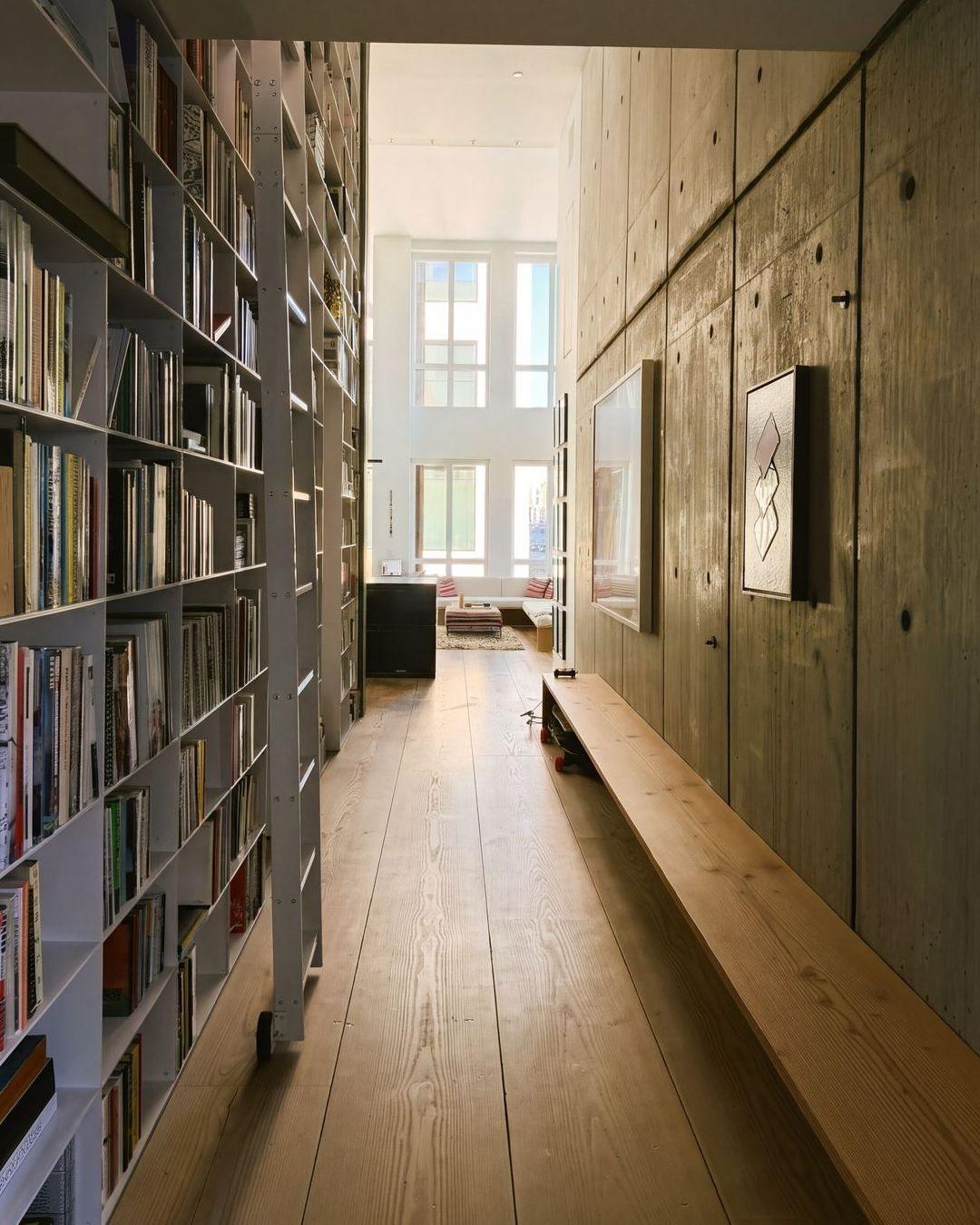
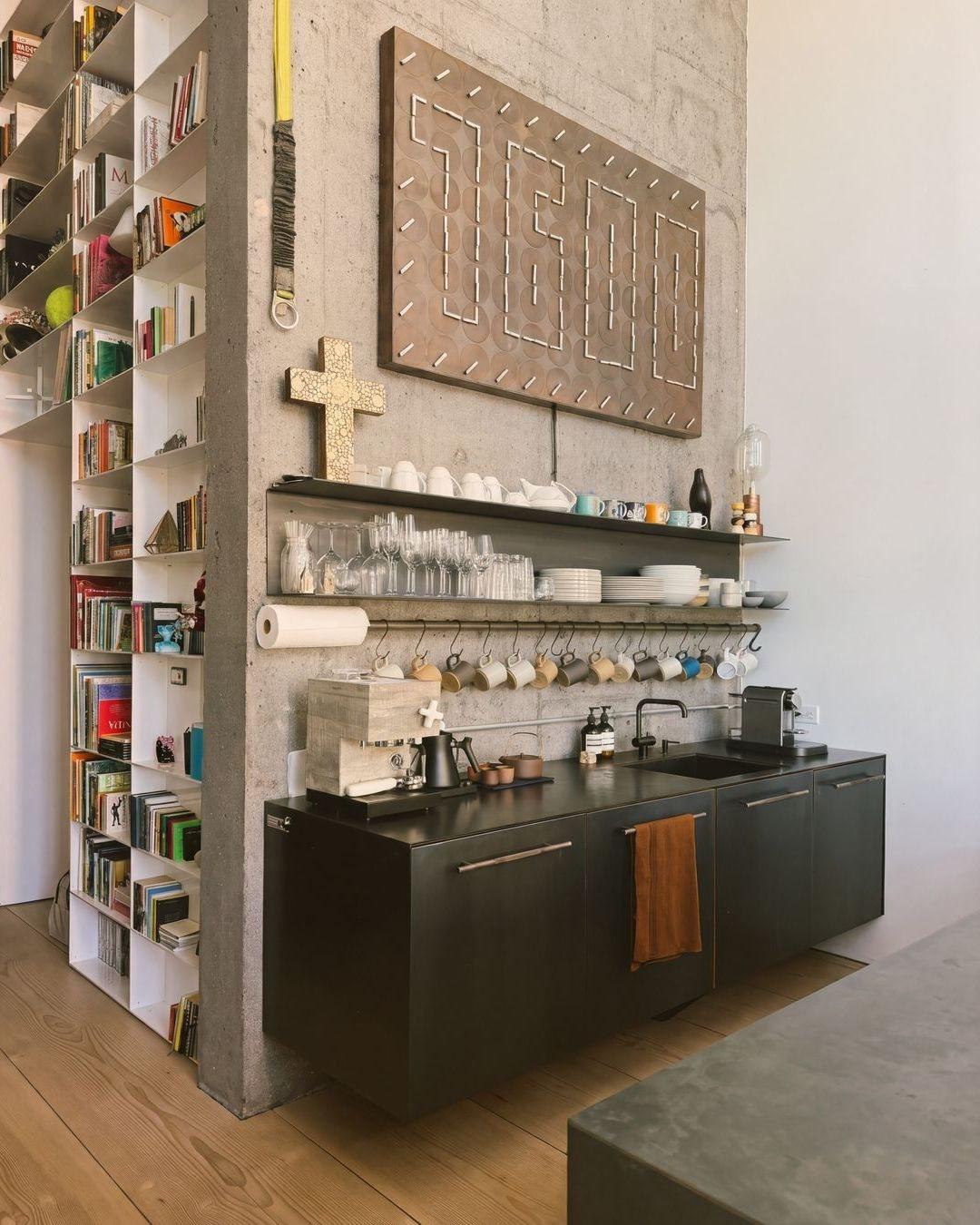
Most of the rest of the work was removal, what Ingels calls "peeling away layers." The living room is two stories high against a wall of cast-in-place concrete that had been boxed in drywall. He took the drywall off and left what was behind it, including a yellow strap sticking out of the pour beside the kitchen. He kept the strap as "a kind of long memory of the construction of the building." On the stair he stripped the paint from the old fire-stair concrete and kept what came out, including orange spray marks the builders had made on a wall that was never meant to be seen.
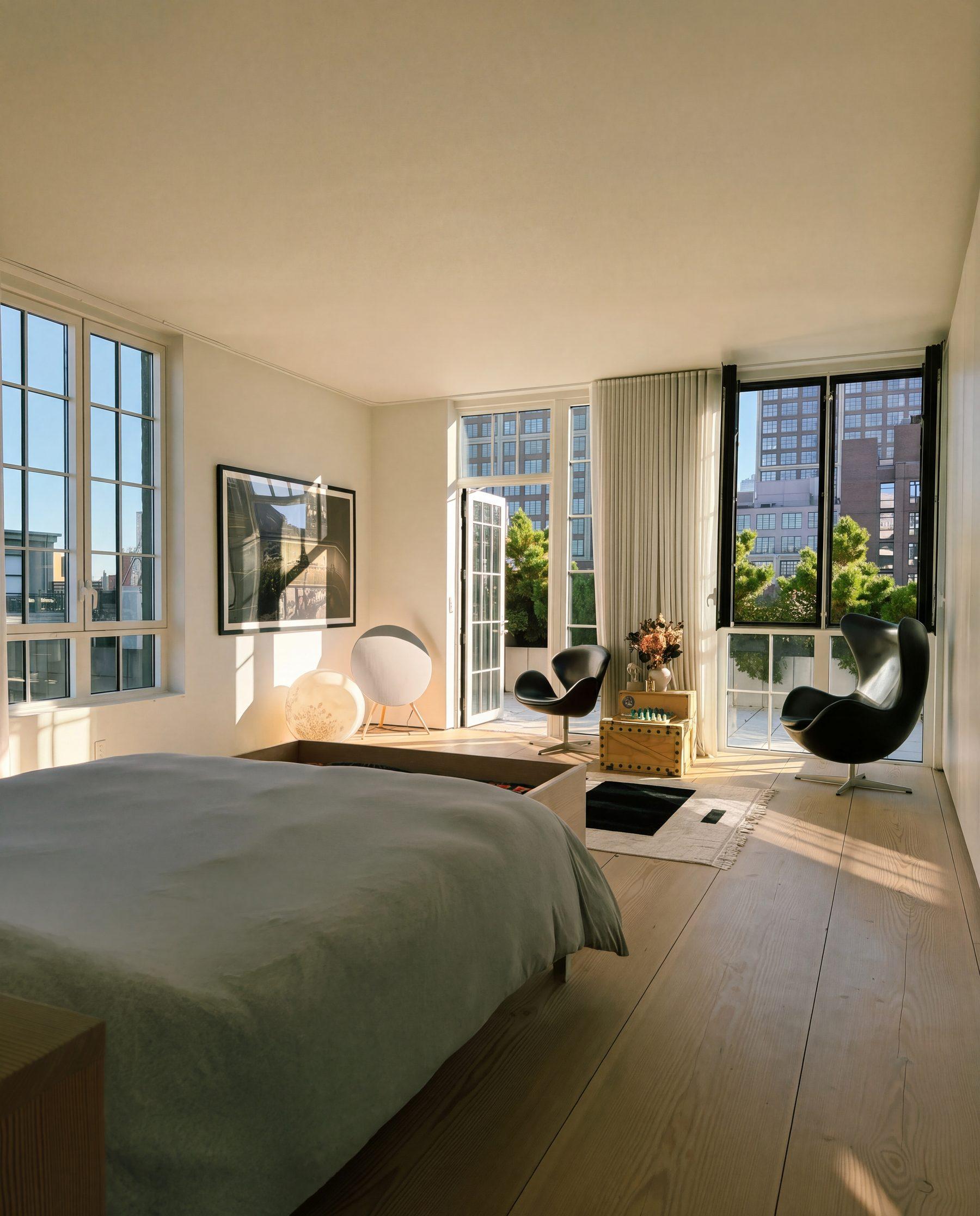
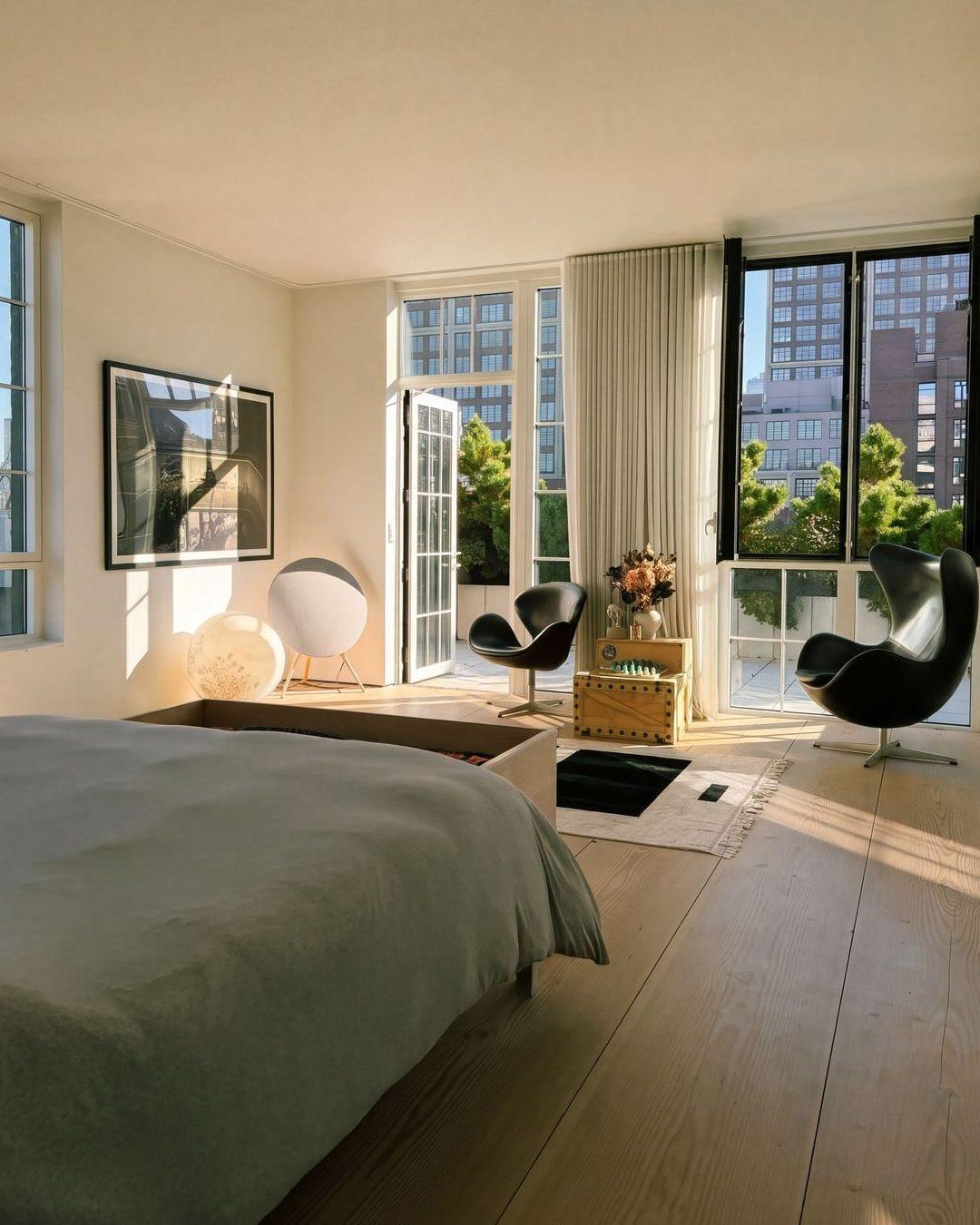
The floors are wide Dinesen planks. The boards left over became the built-in sofa in the living room, the long bench at the entry and the desk in the primary bedroom. Ingels calls it a different kind of luxury, the luxury of authenticity: "an entire tree that you walk on, not just some sticks." Fritz Hansen Egg chairs sit by the bedroom windows.
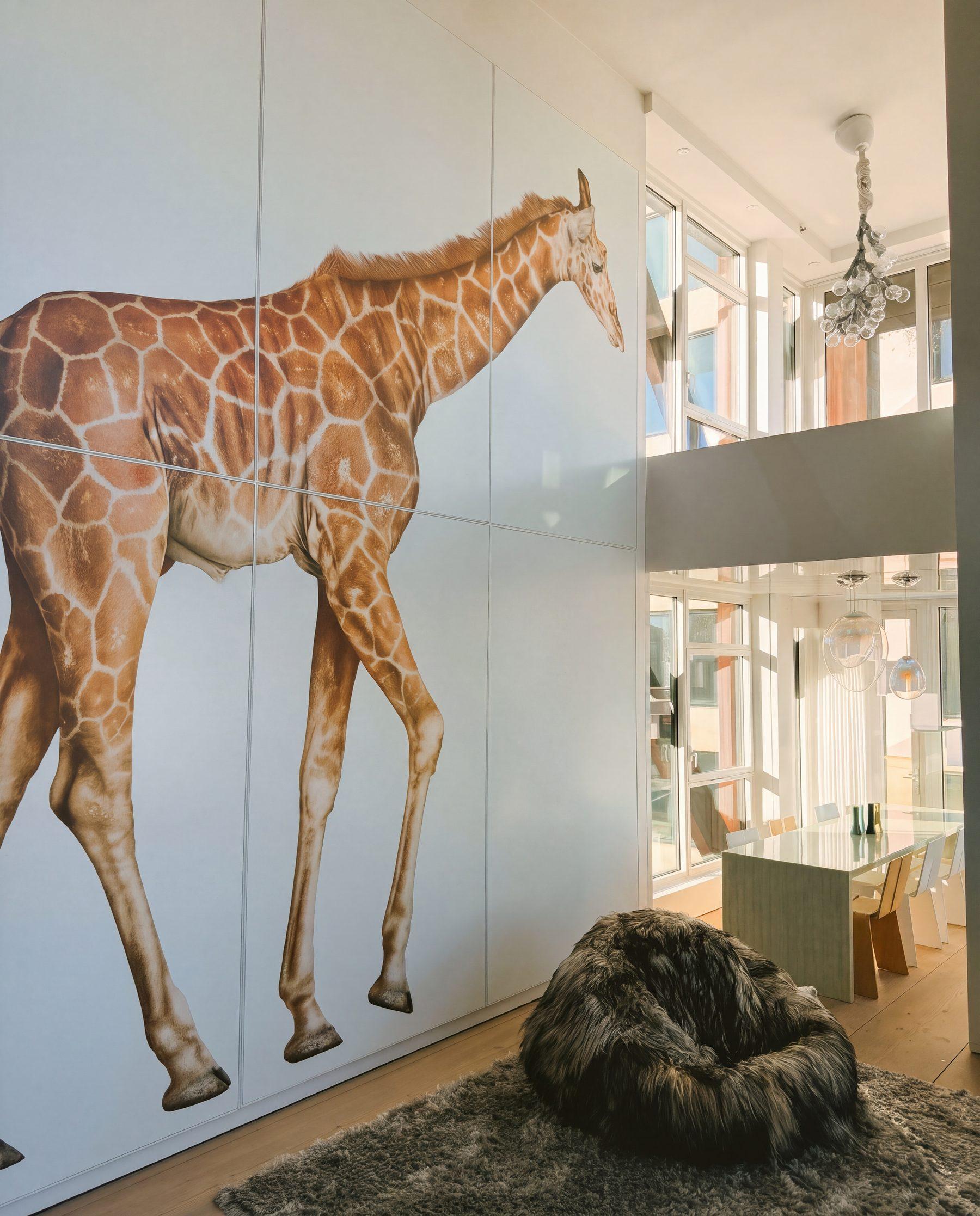
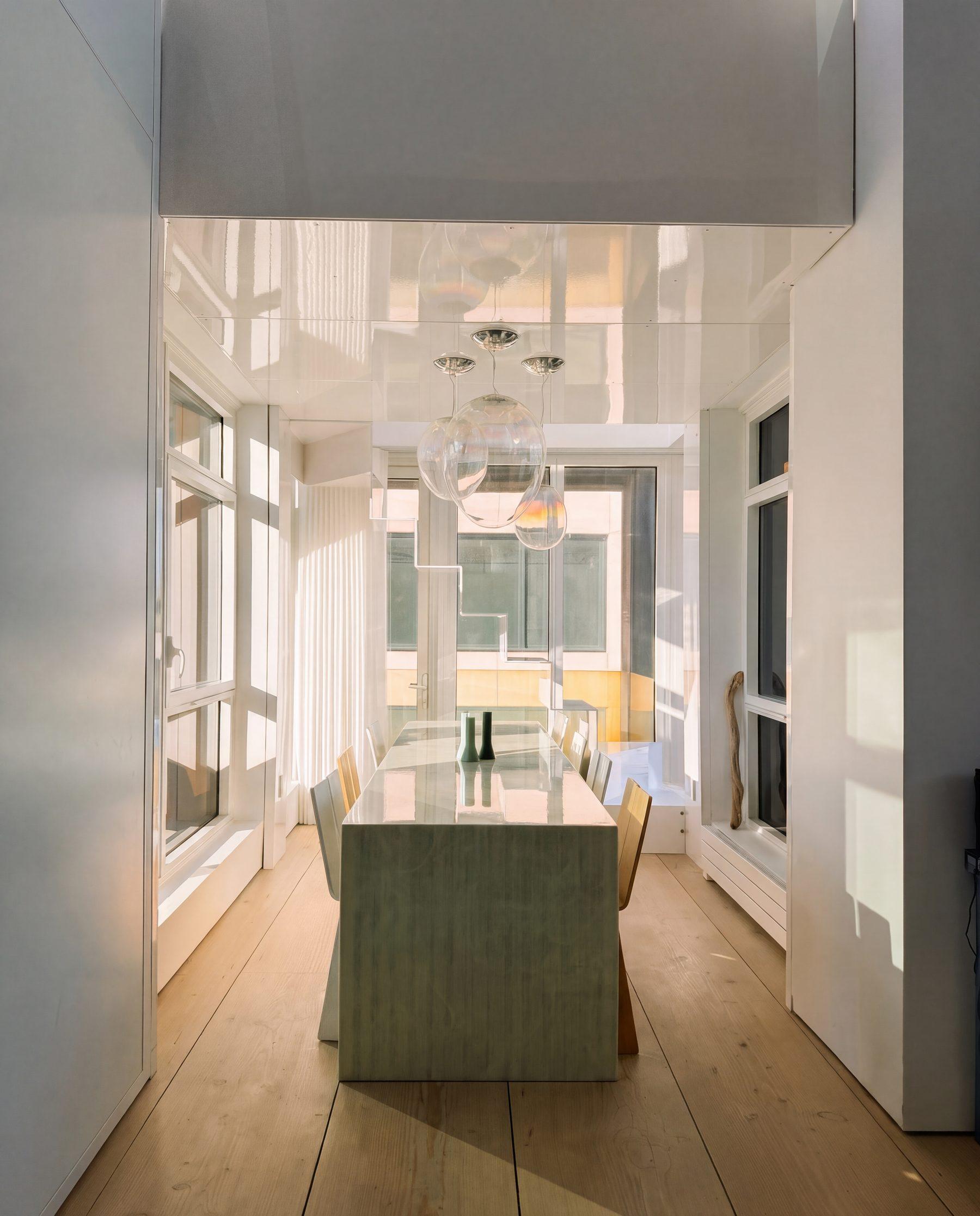
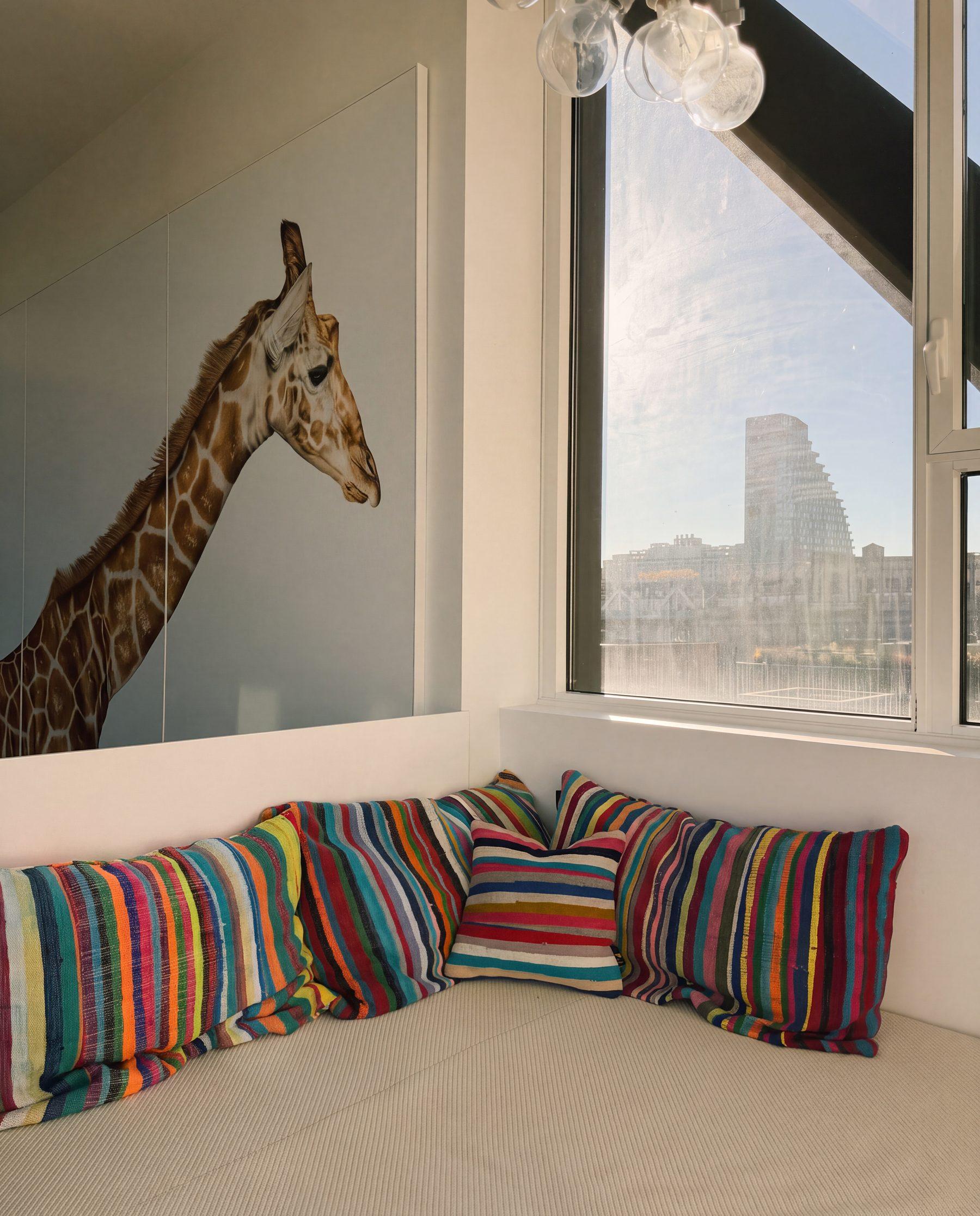
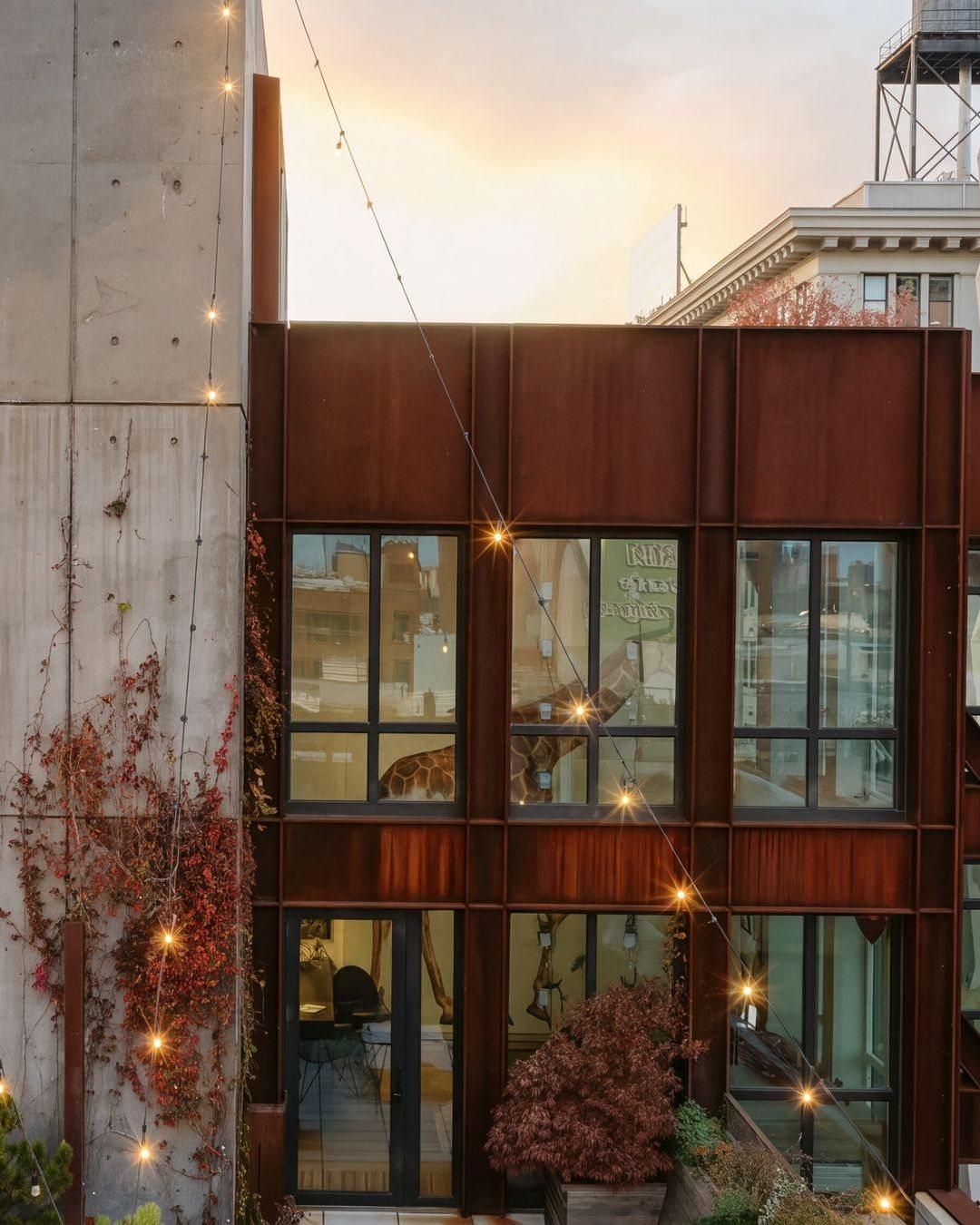
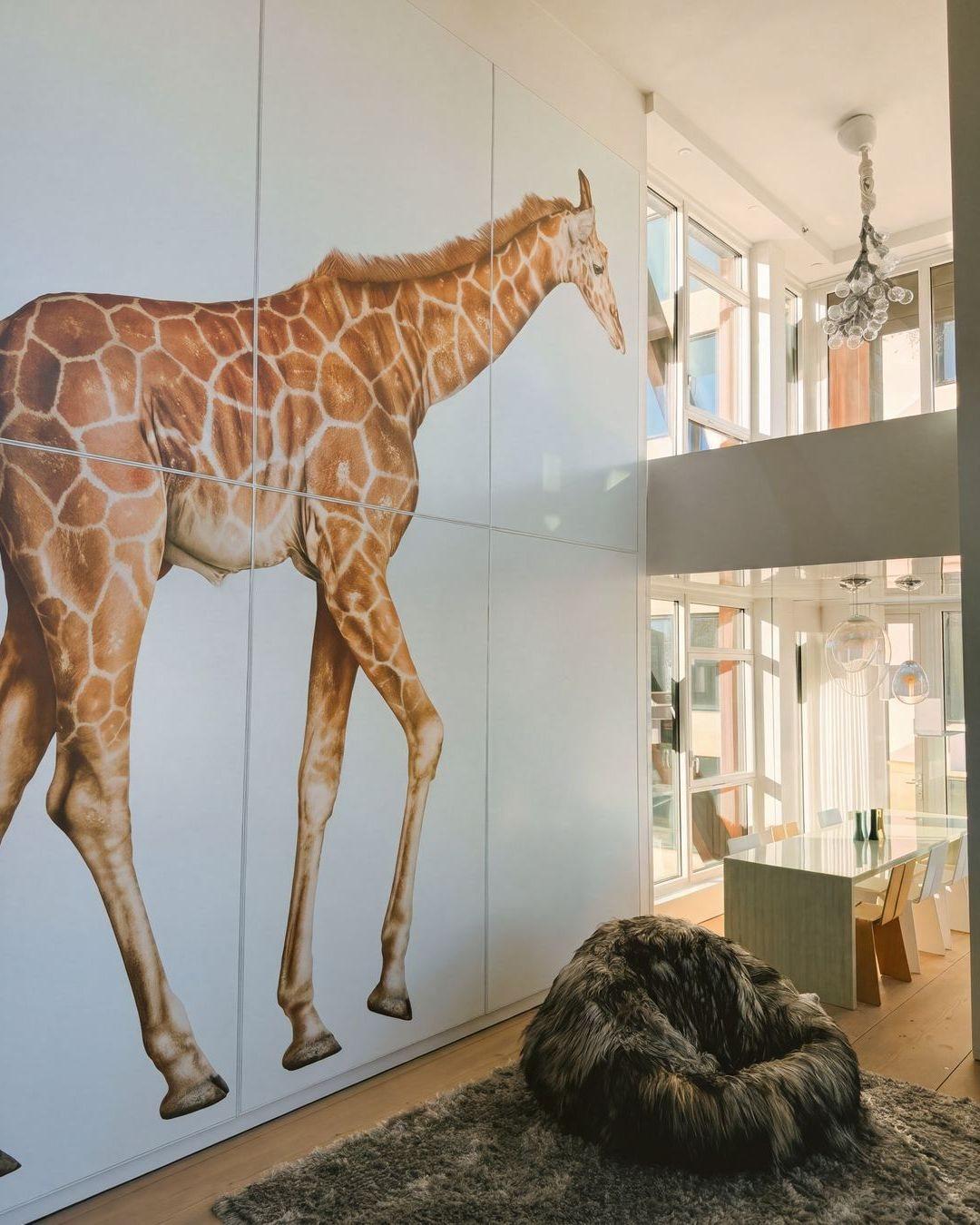
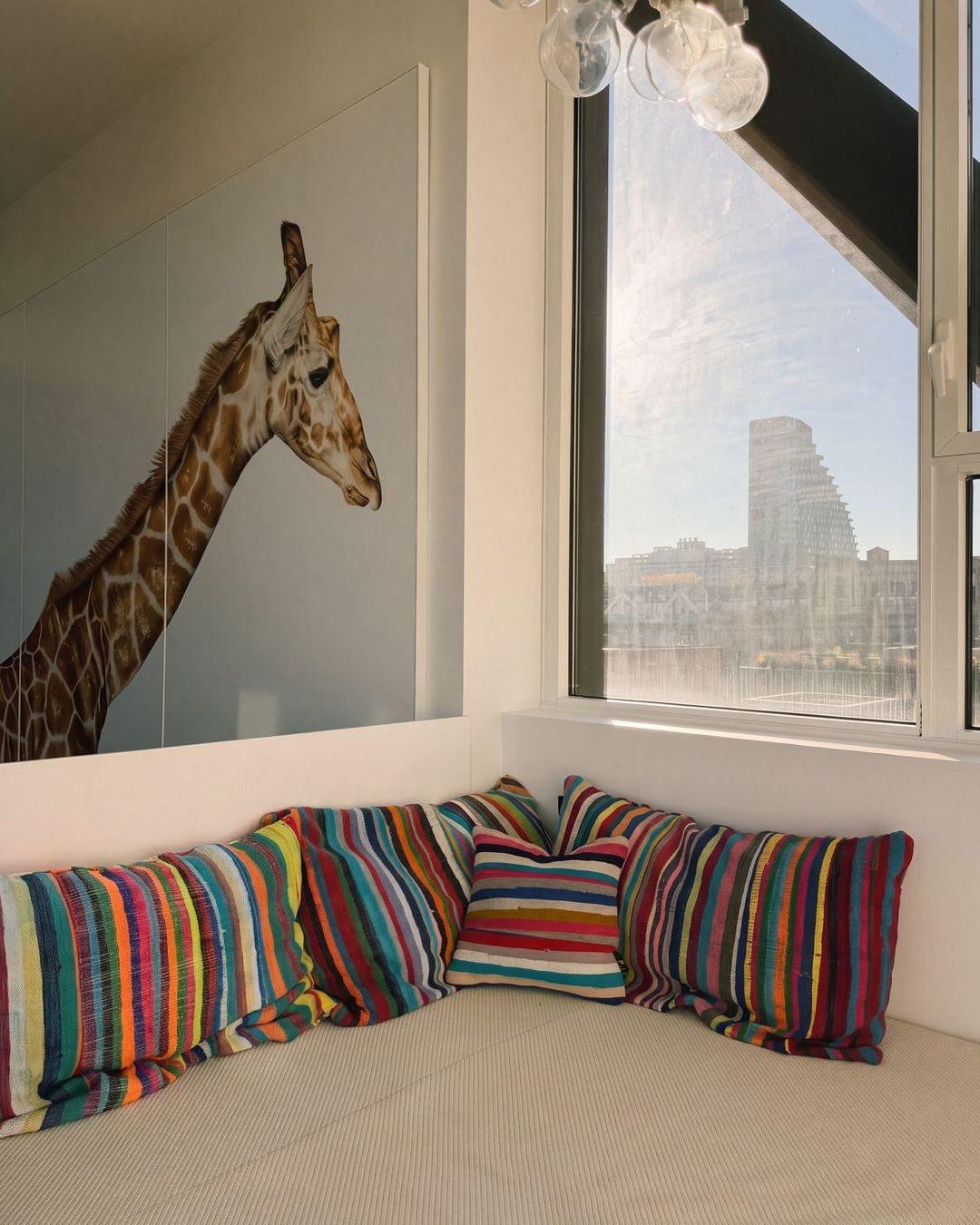
A life-size giraffe portrait by the photographer Andrew Zuckerman, a friend of Ingels, rises up the living room wall beside the concrete. Zuckerman's idea was sixty animal portraits at life size, and by Ingels's account the giraffe had not been made at that size before this wall; he also made the elephant at the entry, grey against the grey concrete. The giraffe's head sits high enough that Ingels built a children's mezzanine over the dining table to get closer to it, reached by a light stair that is easy to miss.
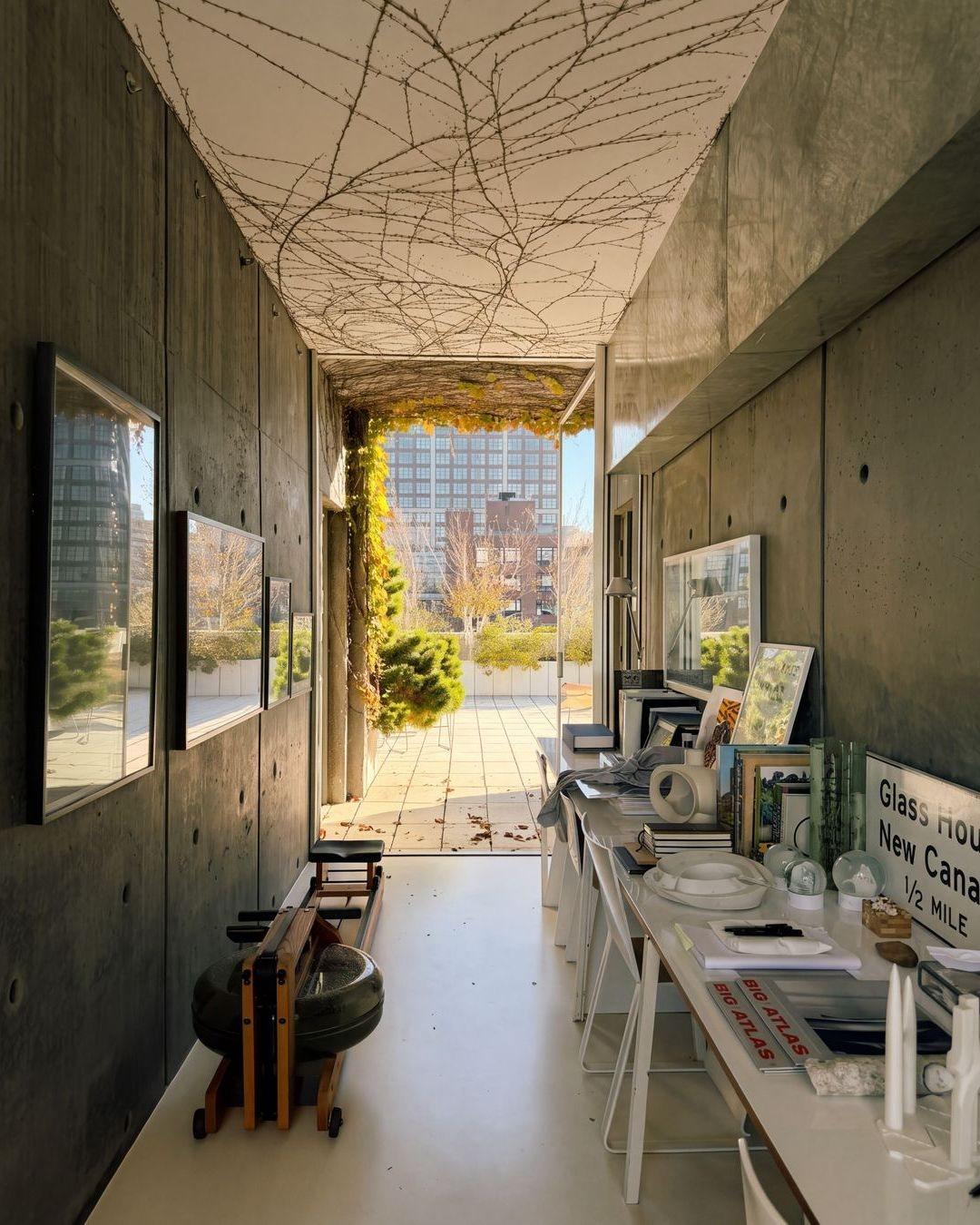
On the top floor, the vine from the roof garden has grown in under the pivot door, whose brush seal is not rubber, and it flowers along the ceiling each spring. It came in while Ingels was abroad for a year or more at the start of the pandemic, and he let it stay: "it's become this kind of beautiful ornament on the ceiling." The astronaut on the same floor is by the Danish-Portuguese artist Victor Ash, a friend who stayed in the apartment for a few weeks and painted it as thanks.
Past the Manhattan Bridge arch and across Jay Street, Ingels says, the noise of Dumbo falls away: cobblestones, warehouses, the bridges overhead and the lower Manhattan skyline across the water. The neighborhood runs into Vinegar Hill, and he describes it as a hybrid between New York and Copenhagen. Brooklyn Bridge Park, which he calls the best park in New York, is close by, and the roof looks onto the Fourth of July fireworks. The garage opens off the cobblestones: press a button and a wall of corten steel slides aside, with the deeded parking space behind it.